In today’s food manufacturing industry, freezing is no longer simply a preservation method. Modern freezing technology directly affects product quality, shelf life, transportation stability, energy consumption, and overall production efficiency. As consumer demand for frozen seafood, prepared meals, meat products, bakery products, fruits, vegetables, and convenience foods continues to grow globally, manufacturers are placing higher demands on freezing equipment for food processing.
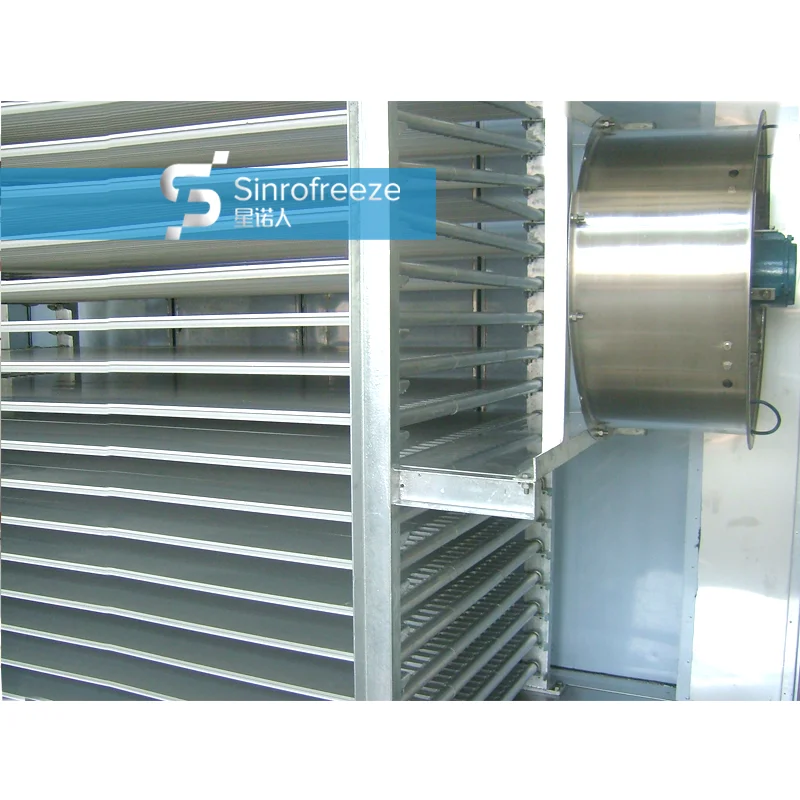
For food processors, selecting the right freezing system is now a critical operational decision that influences product consistency, production capacity, and long-term operating cost.
Modern freezing systems must balance multiple requirements simultaneously, including rapid heat transfer, low dehydration loss, hygienic operation, stable temperature control, and energy efficiency.
Why Freezing Speed Matters in Food Processing
One of the most important factors in frozen food quality is freezing speed.
Slow freezing creates large ice crystals inside food tissue, which can damage cell structures and negatively affect texture, moisture retention, and appearance after thawing. Rapid freezing minimizes crystal size and helps preserve the original quality of the product.
This is especially important for products such as:
-
Seafood
-
Meat products
-
Prepared meals
-
Fruits and vegetables
-
Bakery products
-
Dairy-based foods
Modern freezing equipment for food processing is designed to achieve faster core temperature reduction while maintaining product uniformity throughout the freezing cycle.
In industrial production environments, faster freezing also improves line efficiency and throughput capacity.
IQF Technology Supports High-Quality Frozen Products
Individual Quick Freezing (IQF) systems have become increasingly important in modern food processing facilities.
IQF technology allows individual food items to remain separated during freezing, improving product appearance and usability for end customers.
This technology is widely used for:
-
Shrimp and seafood
-
Frozen vegetables
-
Fruits
-
Diced meat
-
Poultry products
-
Ready-to-cook foods
Compared with conventional bulk freezing, IQF systems provide:
-
Better product separation
-
Lower clumping risk
-
Improved packaging efficiency
-
More attractive retail presentation
High-speed airflow and precise temperature distribution are critical for achieving stable IQF performance.
Spiral Freezers Improve Production Capacity
For high-volume food manufacturers, spiral freezers have become a common solution because of their compact structure and continuous production capability.
Spiral systems maximize freezing capacity while minimizing floor space requirements.
These systems are particularly suitable for:
-
Prepared meals
-
Bakery products
-
Poultry processing
-
Meat processing lines
-
Convenience food production
Continuous conveyor-based operation allows manufacturers to integrate freezing directly into automated production workflows.
This reduces manual handling and improves production consistency.
Energy Efficiency Is Becoming a Core Purchasing Factor
Industrial freezing systems consume significant amounts of energy during daily operation.
As energy prices continue rising globally, food manufacturers are increasingly focused on reducing operational costs through more efficient refrigeration systems.
Modern freezing equipment for food processing now integrates:
-
Optimized airflow systems
-
High-efficiency evaporators
-
Intelligent temperature control
-
Improved insulation structures
-
Variable frequency drive systems
These technologies help reduce energy consumption while maintaining stable freezing performance.
Lower energy usage not only reduces operating cost but also supports sustainability goals and environmental compliance.
Hygienic Design Is Essential in Food Production
Food safety regulations are becoming stricter across global markets.
Freezing equipment must therefore support high sanitation standards and easy cleaning procedures.
Modern systems increasingly adopt hygienic design features such as:
-
Stainless steel construction
-
Smooth internal surfaces
-
CIP-compatible cleaning structures
-
Easy drainage systems
-
Reduced bacterial retention zones
These design improvements help manufacturers reduce contamination risk and improve compliance with food safety standards such as HACCP and FDA requirements.
Temperature Stability Directly Affects Product Consistency
Temperature fluctuation during freezing can lead to inconsistent product quality and uneven freezing performance.
Advanced freezing systems now use intelligent monitoring and automated control systems to maintain stable operating conditions throughout the production cycle.
Precise temperature control helps improve:
-
Product texture consistency
-
Moisture retention
-
Shelf-life stability
-
Packaging performance
-
Yield rates
For export-oriented frozen food manufacturers, maintaining consistent product quality is especially important for meeting international customer expectations.
Different Food Products Require Different Freezing Solutions
Not all food products require the same freezing method.
For example:
Seafood processing often requires ultra-fast freezing to preserve freshness and texture.
Bakery products require controlled airflow to prevent surface cracking or deformation.
Prepared meals require uniform core temperature control to protect product structure and appearance.
Therefore, selecting freezing equipment for food processing should always be based on actual product characteristics, production volume, and process requirements.
Customized freezing system design often provides better long-term operational performance than standardized equipment selection.
Automation Is Improving Production Efficiency
Modern food factories increasingly adopt automated processing lines to improve efficiency and reduce labor dependency.
Advanced freezing systems now integrate with:
-
Automatic conveyors
-
Packaging systems
-
Sorting systems
-
Temperature monitoring platforms
-
Production management systems
Automation reduces manual intervention while improving operational consistency and production traceability.
This is especially valuable for large-scale food processing plants operating continuous production schedules.
Refrigeration Reliability Is Critical for Continuous Production
In food manufacturing, freezing system downtime can quickly lead to production losses and inventory risk.
Reliable refrigeration architecture is therefore essential.
Industrial freezing systems must maintain stable performance under:
-
Continuous operation
-
High humidity environments
-
Heavy production loads
-
Frequent cleaning cycles
Compressor stability, evaporator efficiency, and airflow balance all directly affect long-term equipment reliability.
Nantong Sinrofreeze Equipment Co., Ltd. specializes in integrated freezing equipment for food processing, providing complete food freezing system solutions that combine process design, manufacturing, energy efficiency, and operational safety for modern food production environments.
Its solutions focus on creating safe, efficient, and low-energy freezing systems tailored to different food processing applications.
How to Choose the Right Freezing Equipment for Food Processing
When selecting industrial freezing systems, manufacturers should evaluate several critical factors:
-
Product type and freezing characteristics
-
Required production capacity
-
Energy consumption targets
-
Hygiene requirements
-
Available factory space
-
Automation integration needs
-
Maintenance accessibility
-
Long-term operating stability
The lowest initial equipment cost does not always provide the best long-term operational value.
System efficiency, reliability, and production compatibility often have a greater impact on total lifecycle cost.
Conclusion
Modern freezing equipment for food processing has become a key technology supporting product quality, operational efficiency, and food safety across the global frozen food industry.
As consumer demand for high-quality frozen products continues growing, manufacturers increasingly require freezing systems that deliver rapid freezing performance, stable temperature control, hygienic operation, and low energy consumption.
For food processors seeking long-term production stability and competitive product quality, selecting the right industrial freezing solution is now a strategic investment rather than simply a refrigeration purchase.
www.sinrofreezer.com
Nantong Sinrofreeze Equipment Co., Ltd.