Every industrial facility that operates high-temperature equipment pays for heat twice.
The first cost is obvious: the fuel or electricity required to generate process heat. The second cost is less visible but often far more significant over the lifetime of the equipment—the heat that escapes before it can perform useful work.
Whether the application involves a steel reheating furnace, a ceramic kiln, a petrochemical reactor, a heat treatment line, or a battery material production furnace, uncontrolled heat loss directly affects production efficiency, operating costs, maintenance schedules, and carbon emissions. As energy prices continue to fluctuate and manufacturers face increasingly ambitious sustainability targets, reducing heat loss has become one of the most practical ways to improve plant performance without fundamentally changing production processes.
Many facilities still focus primarily on upgrading burners, installing more advanced control systems, or recovering waste heat. While these investments can deliver measurable improvements, they often overlook one of the simplest opportunities: improving the thermal barrier surrounding the equipment itself.
Well-designed industrial thermal insulation does far more than keep heat inside a furnace. It stabilizes process temperatures, protects surrounding equipment, improves workplace safety, extends equipment life, and reduces long-term operating expenses. More importantly, modern insulation technologies allow engineers to achieve these goals without increasing equipment size or adding unnecessary weight.
Heat Loss Is More Than an Energy Problem
Heat escaping from industrial equipment represents wasted energy, but the consequences extend much further than higher utility bills.
As heat moves through furnace walls, pipelines, ducts, or processing chambers, equipment must continuously consume additional fuel to maintain the required operating temperature. This extra energy demand increases production costs while placing greater thermal stress on burners, heating elements, and structural components.
Excessive surface temperatures also affect the working environment. Operators working near poorly insulated equipment are exposed to higher ambient temperatures, forcing ventilation systems to work harder and reducing overall workplace comfort.
In many continuous production environments, even small improvements in insulation efficiency can produce significant annual savings because the equipment operates twenty-four hours a day for years at a time.
Rather than treating insulation as a construction material, forward-looking manufacturers increasingly view it as an important contributor to process optimization.
Where Industrial Equipment Loses Heat
Heat naturally flows from higher temperatures to lower temperatures. In industrial systems, that transfer occurs continuously unless an effective thermal barrier interrupts it.
The most common areas of heat loss include:
-
Furnace walls and roofs
-
Access doors and inspection ports
-
Expansion joints
-
High-temperature pipelines
-
Valves and flanges
-
Reactor vessels
-
Heat treatment chambers
-
Transfer equipment between production processes
Many facilities invest heavily in efficient combustion systems while overlooking these seemingly minor leakage points. Yet collectively they often account for a considerable percentage of total thermal losses.
During equipment audits, engineers frequently discover that localized heat leakage creates hotspots that increase maintenance requirements while accelerating insulation degradation.
Understanding these thermal weak points is the first step toward improving overall system efficiency.
Understanding Heat Transfer
Every insulation material is designed to slow three basic forms of heat transfer.
| Heat Transfer | Industrial Impact | Typical Insulation Strategy |
|---|---|---|
| Conduction | Heat moves through solid structures | Reduce thermal conductivity |
| Convection | Heated air transfers energy | Limit internal air movement |
| Radiation | Infrared heat escapes at high temperature | Reflect or absorb radiant heat |
Traditional insulation materials often perform well in controlling conduction.
However, as process temperatures increase, thermal radiation becomes increasingly important. Modern high temperature insulation therefore focuses on reducing all three heat transfer mechanisms simultaneously rather than addressing only one.
This engineering principle explains why insulation performance cannot be evaluated solely by thickness.
Why Lower Thermal Conductivity Matters
One of the most common misconceptions is that thicker insulation always provides better protection.
In reality, thermal conductivity is usually the more important parameter.
A material with lower thermal conductivity requires less thickness to achieve the same insulation performance.
This creates several practical advantages:
-
Smaller equipment dimensions
-
Reduced structural weight
-
Greater internal process volume
-
Easier transportation
-
Faster installation
For OEM equipment manufacturers, these advantages often influence equipment design long before insulation materials are purchased.
Compact industrial systems, modular furnaces, battery enclosures, and energy storage containers all benefit from insulation capable of delivering higher thermal performance within limited installation space.
Selecting the Right Insulation Material
No single insulation material is suitable for every application.
Experienced engineers evaluate operating conditions before making material selections.
Ceramic Fiber
Ceramic fiber remains one of the most widely used solutions for industrial furnaces because it combines high-temperature capability with relatively low weight.
Typical applications include:
-
Heat treatment furnaces
-
Kilns
-
Reheating furnaces
-
Industrial ovens
Its flexibility simplifies installation while allowing rapid furnace heating and cooling.
Calcium Silicate
Calcium silicate offers excellent compressive strength and performs particularly well where mechanical durability is important.
Common applications include:
-
Steam pipelines
-
Boilers
-
Petrochemical facilities
Although heavier than fibrous materials, it provides reliable long-term structural performance.
Mineral Wool
Mineral wool continues to serve medium-temperature industrial processes where acoustic insulation and fire resistance are equally important.
It is widely used for process piping, equipment housings, and building services.
Microporous Insulation
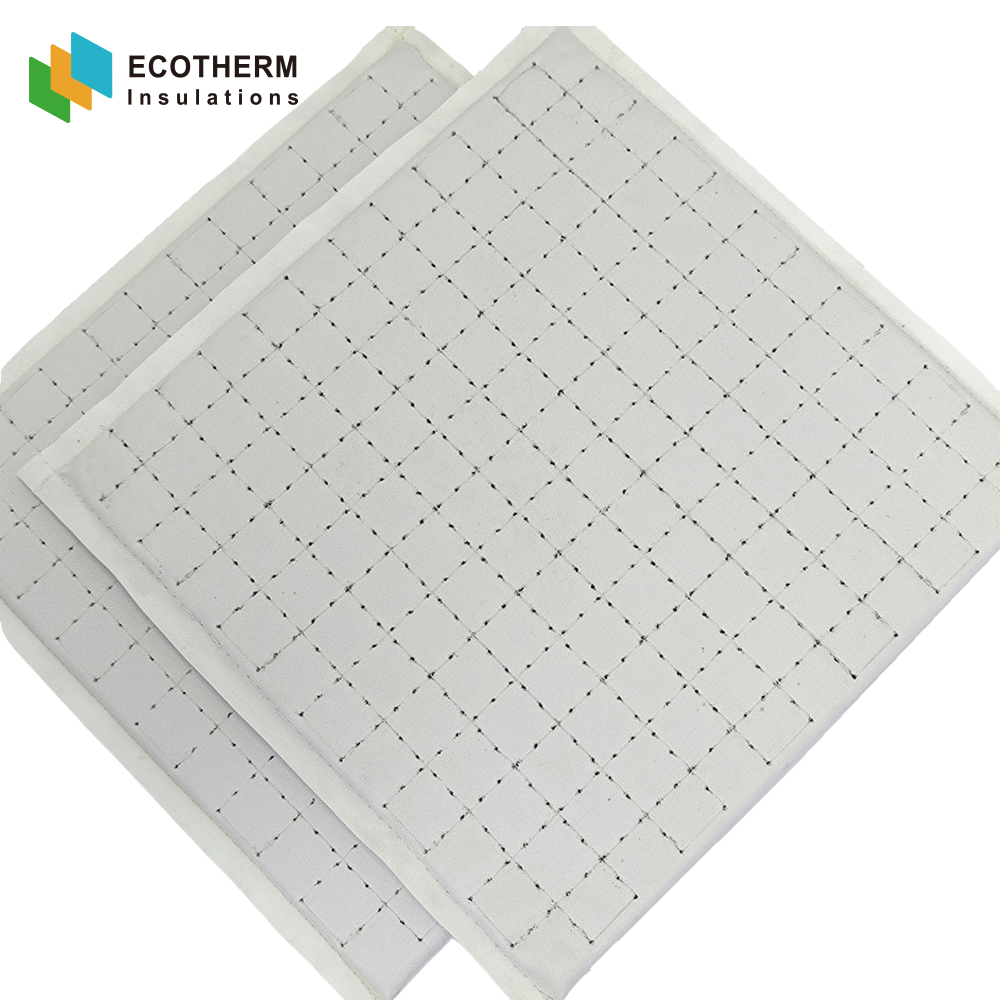
As industrial equipment becomes more compact and energy efficiency requirements become more demanding, microporous insulation has emerged as a valuable solution for applications requiring exceptionally low thermal conductivity.
Instead of relying solely on trapped air, nano microporous insulation uses an engineered pore structure that minimizes conduction, convection, and thermal radiation simultaneously.
Because of this structure, microporous insulation panels can often achieve comparable thermal performance with significantly reduced thickness.
Rather than replacing traditional materials entirely, they are frequently incorporated into multilayer insulation systems where maximum thermal resistance is required.
Factory Perspective: How Equipment Manufacturers Evaluate Insulation
Material suppliers often emphasize product specifications.
Equipment manufacturers look at a much broader picture.
When designing a new furnace or thermal processing system, engineers typically ask questions such as:
-
Will thinner insulation reduce equipment dimensions?
-
Can lower shell temperatures improve operator safety?
-
Will reduced heat loss decrease annual fuel consumption?
-
Can lighter insulation simplify transportation and installation?
-
Will better thermal stability improve product quality?
These considerations extend beyond the insulation itself.
For example, reducing furnace wall thickness may allow manufacturers to increase internal chamber volume without increasing the overall equipment footprint.
Similarly, lighter insulation reduces structural loading, allowing support frames to be optimized.
The result is not simply a better insulation system but a more competitive piece of industrial equipment.
Practical Methods to Reduce Heat Loss
Reducing heat loss usually requires a combination of engineering improvements rather than a single solution.
The following practices consistently deliver measurable benefits.
Optimize Insulation Design
Many older systems continue using insulation packages designed decades ago.
Modern insulation materials often allow engineers to redesign wall structures with improved thermal performance while reducing overall thickness.
Eliminate Thermal Bridges
Heat frequently escapes through metal supports, fasteners, pipe penetrations, and structural connections.
Minimizing these thermal bridges improves insulation effectiveness without increasing insulation thickness.
Inspect Insulation Regularly
Mechanical damage, moisture intrusion, vibration, and thermal cycling gradually reduce insulation performance.
Routine inspections help identify localized failures before they become significant sources of energy loss.
Upgrade During Planned Shutdowns
Rather than waiting for major failures, many manufacturers integrate insulation improvements into scheduled maintenance periods.
This approach minimizes production interruptions while steadily improving equipment efficiency over time.
Industry Trends Driving Better Thermal Management
Industrial insulation is evolving alongside broader manufacturing trends.
Several developments are shaping future thermal management strategies.
Higher Energy Efficiency Standards
Governments and industrial organizations continue introducing stricter efficiency requirements for energy-intensive industries.
Insulation performance is becoming an increasingly important factor in equipment certification and lifecycle evaluation.
Equipment Miniaturization
Modern industrial systems are becoming smaller without sacrificing production capacity.
This trend increases demand for insulation materials capable of delivering excellent thermal resistance within limited space.
Electrification
Battery manufacturing, hydrogen production, and electric heating technologies require precise thermal management rather than simple heat containment.
Advanced insulation materials play a growing role in maintaining process stability.
Digital Engineering
Thermal simulation software allows engineers to optimize insulation layouts during equipment design rather than relying solely on historical experience.
Combined with modern materials, digital modelling enables more efficient and predictable thermal systems.
A Long-Term Investment Rather Than a Material Purchase
Reducing heat loss should never be viewed simply as replacing one insulation product with another.
The objective is to improve the overall thermal performance of industrial equipment throughout its operating life.
An effective insulation strategy influences fuel consumption, equipment dimensions, production stability, maintenance frequency, workplace safety, and carbon emissions simultaneously.
Manufacturers that evaluate insulation from this broader engineering perspective often discover opportunities extending well beyond energy savings alone.
As industrial processes continue demanding greater efficiency and sustainability, industrial thermal insulation will remain one of the most practical and cost-effective tools available for improving high-temperature equipment. Whether the solution involves ceramic fiber, calcium silicate, refractory systems, or advanced microporous insulation, successful thermal management depends on selecting the right material for the right application—and designing the complete insulation system as an integrated part of the equipment rather than an afterthought.
www.ecotherm-insulation.com
ecotherm