In industrial power transmission systems, pulley performance directly affects equipment stability, energy efficiency, maintenance frequency, and long-term operating cost. While standard cast iron pulleys remain widely used in general machinery, more industries are shifting toward stainless steel v belt pulley solutions for applications involving corrosion, moisture, chemical exposure, food processing, and high-cleanliness operating environments.
However, not all stainless steel pulleys provide the same level of durability or machining precision. In demanding industrial applications, poor pulley concentricity, incorrect groove geometry, weak balancing performance, or improper material selection can rapidly lead to belt wear, vibration, transmission inefficiency, and unplanned downtime.
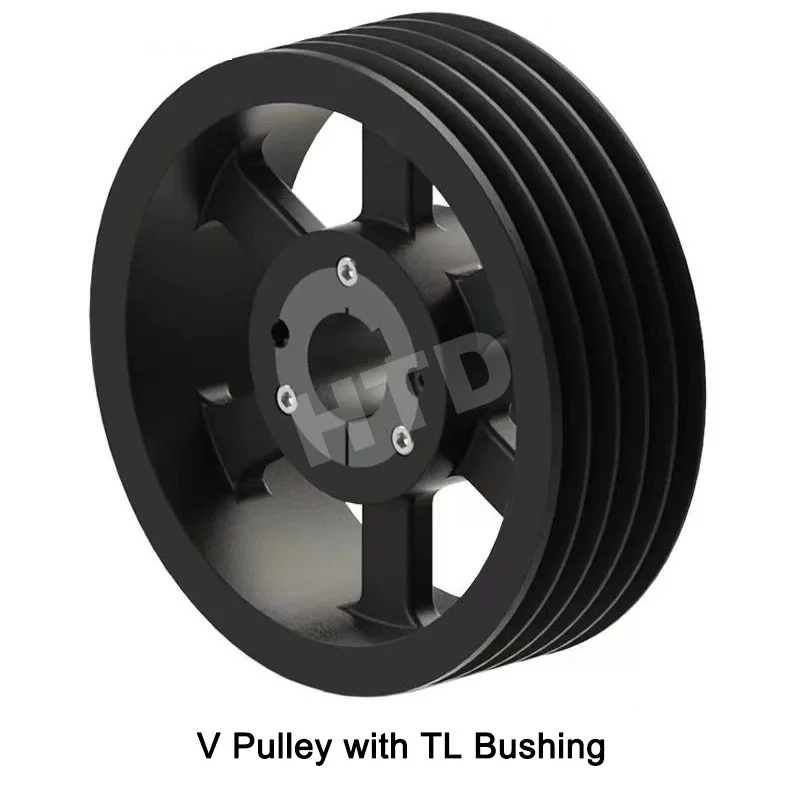
This article explains how industrial users can evaluate stainless steel v belt pulley systems from a technical and operational perspective to improve long-term transmission reliability.
Why Stainless Steel V Belt Pulleys Are Increasingly Used in Industrial Equipment
Traditional cast iron pulleys perform well in dry and stable industrial environments. However, many modern production facilities operate under far more aggressive conditions.
Industries such as:
-
Food processing
-
Pharmaceutical manufacturing
-
Chemical processing
-
Marine equipment
-
Environmental protection systems
-
Beverage production
-
Outdoor machinery
-
High-humidity manufacturing
often expose transmission systems to:
-
Water vapor
-
Chemical cleaning agents
-
Salt exposure
-
Corrosive gases
-
Frequent washdowns
-
Temperature fluctuations
Under these conditions, ordinary carbon steel or cast iron pulleys may quickly develop:
-
Surface corrosion
-
Groove wear
-
Oxidation buildup
-
Imbalance issues
-
Reduced belt grip consistency
A stainless steel v belt pulley provides significantly better environmental durability while maintaining stable mechanical transmission performance.
Material Selection Directly Affects Pulley Service Life
The choice of stainless steel grade is one of the most important engineering factors.
Different stainless steel materials provide different balances of:
-
Corrosion resistance
-
Mechanical strength
-
Machinability
-
Cost efficiency
304 Stainless Steel V Belt Pulley
304 stainless steel is one of the most commonly used materials for industrial pulleys.
It offers:
-
Good corrosion resistance
-
Stable mechanical properties
-
Excellent surface finish
-
Strong general-purpose durability
304 pulleys are widely used in:
-
Food machinery
-
Packaging equipment
-
Conveyor systems
-
Light chemical environments
However, chloride-rich or marine environments may still cause localized corrosion over time.
316 Stainless Steel V Belt Pulley
316 stainless steel contains molybdenum, which significantly improves resistance to:
-
Salt spray corrosion
-
Chloride exposure
-
Chemical corrosion
316 pulleys are commonly selected for:
-
Marine equipment
-
Offshore systems
-
Pharmaceutical production
-
High-humidity processing lines
-
Aggressive cleaning environments
Although 316 material costs are higher, the longer service life often reduces total lifecycle maintenance cost.
Groove Precision Determines Transmission Efficiency
One of the most overlooked aspects of a stainless steel v belt pulley is groove machining accuracy.
Improper groove geometry causes:
-
Uneven belt contact
-
Excessive belt wear
-
Slippage
-
Increased vibration
-
Reduced torque transmission
Industrial-grade pulleys typically follow standardized groove profiles such as:
-
SPA
-
SPB
-
SPC
-
Classical A/B/C sections
Precision groove machining ensures:
-
Uniform belt seating
-
Stable friction transfer
-
Reduced heat generation
-
Improved transmission efficiency
In high-speed equipment, even small groove deviations can significantly reduce belt lifespan.
Dynamic Balancing Becomes Critical at High Rotational Speeds
As rotational speed increases, pulley balancing quality becomes increasingly important.
Poor balancing may create:
-
Shaft vibration
-
Bearing overload
-
Increased noise
-
Premature equipment wear
-
Reduced motor efficiency
Industrial stainless steel v belt pulley systems operating at high RPM often require dynamic balancing according to ISO balancing standards.
Typical balancing grades may include:
-
G6.3 for standard industrial machinery
-
G2.5 for higher precision rotating systems
Precision-balanced pulleys improve equipment smoothness and reduce long-term maintenance risk.
Surface Finish Influences Corrosion Resistance and Hygiene
Surface treatment is especially important for stainless steel transmission components used in hygienic or corrosive environments.
Common finishing processes include:
-
Mechanical polishing
-
Mirror polishing
-
Electropolishing
-
Sandblasting
-
Passivation treatment
In food and pharmaceutical industries, smoother surfaces help reduce:
-
Bacterial retention
-
Material contamination
-
Cleaning difficulty
Electropolished stainless steel v belt pulley systems also provide improved corrosion resistance by reducing microscopic surface irregularities.
Why Stainless Steel Pulleys Are Important in Food Processing Equipment
Food manufacturing environments create unique transmission system challenges.
Equipment must tolerate:
-
Frequent cleaning cycles
-
High humidity
-
Acidic ingredients
-
Sanitation chemicals
-
Strict hygiene standards
Ordinary pulleys may rust or contaminate production areas.
Stainless steel v belt pulley systems are commonly used in:
-
Conveyor systems
-
Packaging machinery
-
Bakery production lines
-
Beverage filling equipment
-
Meat processing systems
The corrosion resistance and cleanability of stainless steel significantly improve equipment reliability in these environments.
Corrosion Resistance Reduces Maintenance Downtime
Corrosion is one of the most common causes of pulley failure in industrial environments.
Surface oxidation can gradually affect:
-
Groove geometry
-
Belt alignment
-
Rotational balance
-
Torque transmission
A stainless steel v belt pulley provides long-term resistance against:
-
Moisture exposure
-
Condensation
-
Industrial chemicals
-
Outdoor weather conditions
This reduces:
-
Replacement frequency
-
Lubrication contamination
-
Unexpected shutdowns
-
Long-term maintenance cost
For continuous production facilities, improved reliability often delivers greater economic value than initial component cost savings.
Precision Machining Improves Transmission Stability
Modern industrial equipment increasingly requires tighter mechanical tolerances.
High-precision pulley machining improves:
-
Shaft concentricity
-
Rotational stability
-
Belt alignment
-
Noise reduction
-
Load distribution
Critical machining parameters include:
-
Bore tolerance
-
Runout control
-
Keyway precision
-
Groove symmetry
-
Surface concentricity
CNC machining technology has become essential for high-performance stainless steel v belt pulley manufacturing.
Lightweight Design Helps Improve Energy Efficiency
Compared with oversized cast components, optimized stainless steel pulley designs can reduce rotational inertia.
Lower rotational mass improves:
-
Startup response
-
Energy efficiency
-
Motor load stability
-
Dynamic performance
This becomes especially important in:
-
High-speed automation systems
-
Precision conveying equipment
-
Servo-driven machinery
Advanced pulley engineering increasingly combines structural strength with lightweight optimization.
OEM Customization Is Becoming More Important
Industrial transmission systems rarely use completely standardized pulley configurations.
Many applications require customized:
-
Groove dimensions
-
Bore sizes
-
Keyways
-
Surface finishes
-
Balancing specifications
-
Shaft locking systems
-
Multi-groove designs
Hetuoda Machinery Manufacturing specializes in high-precision transmission components including timing pulleys, gears, tensioners, racks, and custom-machined mechanical parts, while also providing OEM manufacturing services for industrial transmission applications.
Custom engineering capability is increasingly important for modern automated equipment manufacturers.
Pulley-Belt Matching Affects Entire System Performance
Even a high-quality pulley cannot perform properly if matched with an unsuitable belt system.
Transmission optimization requires considering:
-
Belt type
-
Belt tension
-
Center distance
-
Rotational speed
-
Load fluctuation
-
Environmental conditions
Incorrect matching may result in:
-
Excessive heat generation
-
Reduced transmission efficiency
-
Belt cracking
-
Premature bearing failure
Industrial transmission systems should therefore be evaluated as complete assemblies rather than isolated components.
Quality Control Determines Long-Term Reliability
Inconsistent manufacturing quality remains a major issue in the industrial pulley market.
Poor-quality stainless steel v belt pulley products may suffer from:
-
Material defects
-
Bore misalignment
-
Uneven balancing
-
Weak weld integrity
-
Surface contamination
-
Improper hardness control
Reliable manufacturers typically implement:
-
Material traceability
-
Dimensional inspection
-
Dynamic balancing testing
-
Surface roughness verification
-
Corrosion resistance testing
Consistent production quality is especially important for automated industrial systems operating continuously.
How to Evaluate a Stainless Steel V Belt Pulley Supplier
Industrial buyers increasingly evaluate suppliers based on:
-
Precision machining capability
-
Stainless steel material expertise
-
OEM customization support
-
Dynamic balancing capability
-
Delivery stability
-
Technical support
-
Quality inspection standards
-
Long-term manufacturing consistency
Suppliers with strong machining and engineering capabilities are generally better equipped to support complex industrial transmission projects.
Conclusion
The stainless steel v belt pulley has become an increasingly important component in modern industrial transmission systems where corrosion resistance, precision machining, and long-term operational reliability are critical.
As industries continue moving toward higher automation, stricter hygiene requirements, and more demanding operating environments, the limitations of traditional pulley materials become increasingly visible.
For manufacturers seeking stable transmission performance, lower maintenance frequency, and longer equipment service life, selecting a high-quality stainless steel v belt pulley solution is becoming a strategic engineering decision rather than a simple component replacement.
www.cdepulley.com
Suzhou Hetuoda Machinery Manufacturing Co., Ltd.