For businesses shipping goods from China to Australia, sea freight remains the backbone of cross-border trade, offering a cost-effective alternative to air cargo for bulk and non-urgent shipments. However, the process is often complicated by high freight costs, unpredictable transit times, complex customs clearance procedures, cargo damage risks, and a lack of real-time visibility. DAKA International Transport Company Ltd., operating under the brand name DAKA, has built its entire business model around solving these specific pain points along the China-Australia corridor since its founding in 2016.
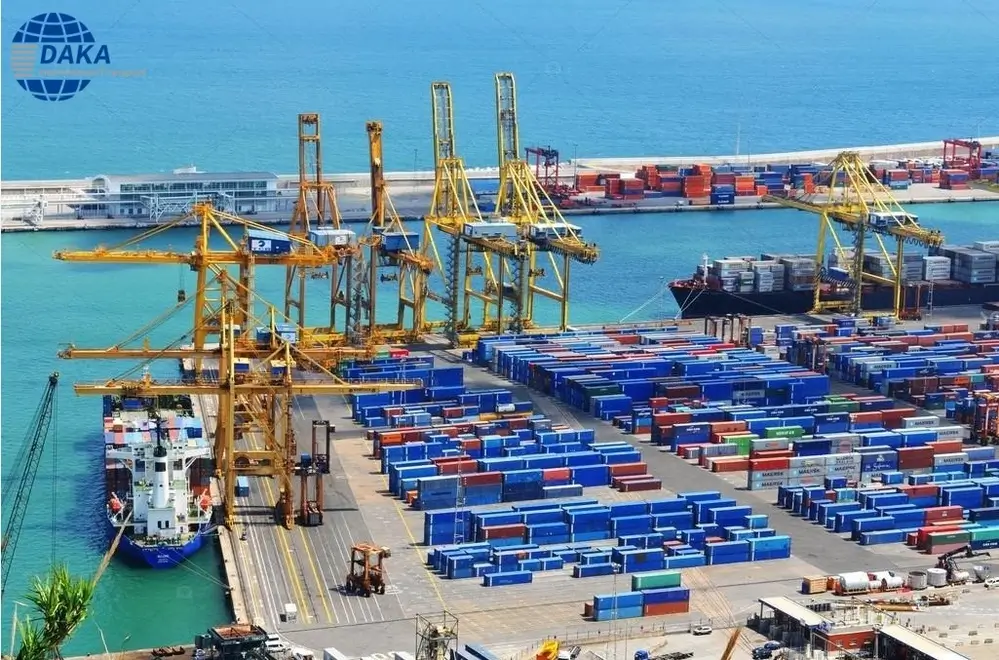
Why Sea Freight Still Matters for China-Australia Trade
Sea freight is typically the preferred method for shipping furniture, industrial machinery, electronics, apparel, and other goods that do not require the speed of air transport. For small and medium-sized enterprises (SMEs), Amazon sellers, and individual importers, the ability to move large volumes at a lower per-unit cost is essential to maintaining healthy margins. DAKA addresses this directly through two core sea freight products: FCL (Full Container Load) and LCL (Less than Container Load) shipping, both structured around a door-to-door or port-to-port delivery model.
FCL Shipping: Full Container Solutions for China-to-Australia Cargo
FCL shipping is designed for businesses moving larger volumes that justify booking an entire 20-foot or 40-foot container. DAKA’s approach to FCL centers on three differentiated values:
Cost transparency. DAKA provides an all-in cost breakdown without hidden charges, supported by contracted pricing with vessel owners. For the period of Jan 2026 to June 2026, 20-foot containers range from $800 to $2,300, while 40-foot containers range from $1,500 to $4,600.
Reliable transit scheduling. As a direct partner of major shipping lines including COSCO, MSK, MSC, YML, EMC, and OOCL, DAKA offers online booking and priority space allocation even during peak shipping seasons — a critical advantage when carrier capacity tightens and smaller forwarders struggle to secure space. Port-to-port transit times vary by origin and destination. For example, Shenzhen to Sydney or Melbourne takes 12–16 days, while Shenzhen to Adelaide takes 22–27 days. Shipments from Qingdao, the northernmost major port in DAKA’s network, take longer: 18–20 days to Sydney or Melbourne and up to 27–33 days to Adelaide. For FCL door-to-door service, transit time runs approximately 7 days longer than the equivalent port-to-port figure.
Full-chain coordination. DAKA’s FCL service includes pickup from Chinese factories, coverage from all major Chinese ports — Guangzhou, Foshan, Shenzhen, Hong Kong, Xiamen, Ningbo, Shanghai, Qingdao, and Tianjin — to all major Australian ports, including Sydney, Melbourne, Brisbane, Adelaide, Fremantle, Darwin, and Cairns. Customs clearance is handled in both China and Australia, and the company consolidates products from multiple factories into a single container, which reduces cost and documentation complexity for buyers sourcing from several suppliers.
LCL Shipping: A Practical Option for Smaller Volumes
Not every shipment justifies a full container, and this is where LCL shipping fills a critical gap. LCL allows businesses to share container space, paying only for the volume they use. DAKA’s LCL service addresses the common frustrations associated with shared-container shipping — namely, high destination surcharges in Australia, unstable transit times, and the risk of storage penalties.
DAKA’s all-in LCL quotations include Australian port charges upfront, with ocean freight rates ranging from USD 50 to USD 100 per cubic meter. To keep transit predictable, DAKA operates on a consistent weekly loading schedule every Tuesday and Friday. Delivery flexibility is another key feature: last-mile delivery in Australia can be arranged via standard trucks, tail-lift vehicles, HIAB, or crane trucks, depending on the nature of the cargo. Importantly, DAKA imposes no minimum order requirement for LCL shipments, which makes the service accessible to smaller businesses and individual importers who might otherwise face high minimum charges elsewhere.
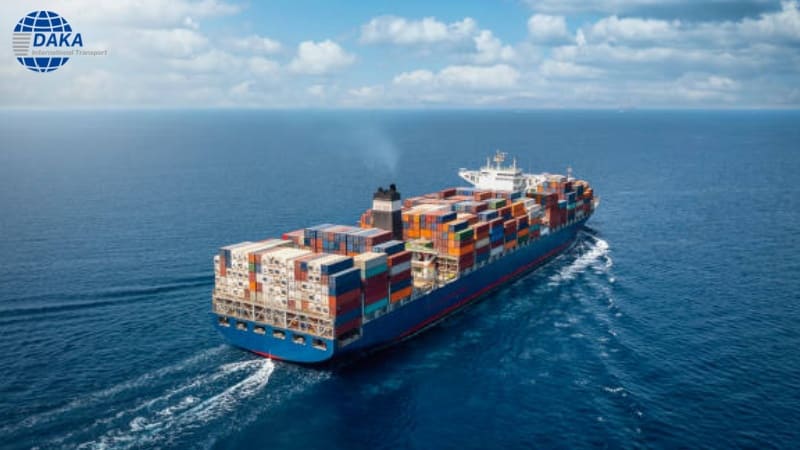
Why Shippers Choose DAKA for the China-Australia Route
DAKA’s sea freight capabilities are reinforced by the company’s broader infrastructure and compliance credentials. With 17 offices across China — including Shenzhen, Guangzhou, Shanghai, Ningbo, and Qingdao — and more than 800 employees, DAKA manages a monthly shipping volume of approximately 600 containers by sea. The company has handled over 80,000 containers and served more than 5,000 buyers in Australia since 2016, reflecting a depth of operational experience specific to this trade lane.
Customs expertise reduces delays. As an AA-level customs broker authorized by the Chinese government, DAKA benefits from faster release speeds and lower inspection rates, which reduces transportation delays and helps avoid additional costs. On the Australian side, the company maintains in-house licensed brokers and is proficient in Australian customs law and Amazon FBA inbound rules, helping ensure compliant documentation and reducing the risk of customs detention. DAKA is also recognized as part of the Australian Border Force (ABF) Approved Local Partner Network and holds professional qualification for Australian biosecurity compliance — a relevant credential given Australia’s strict biosecurity requirements for goods such as raw wood furniture, which require valid fumigation certificates to clear customs without delay.
Technology adds visibility. DAKA’s End-to-End Digital Control Tower connects all logistics links on a unified platform, offering GPS-enabled vehicle tracking and API integration with major airlines and shipping lines. The platform integrates directly with China’s International Trade Single Window and Australia’s Integrated Cargo System (ICS), while smart consolidation algorithms optimize load density and routing for LCL shipments.
Warehousing supports consolidation. DAKA operates over 50,000 square meters of storage across China, along with local warehousing in Sydney, Melbourne, Brisbane, Adelaide, and Fremantle. This network supports the consolidation of multi-supplier orders — a documented case involved a buyer purchasing from various Chinese factories, with DAKA consolidating items into one container via its Shenzhen warehouse, resulting in a significant reduction in total shipping cost compared to shipping separately.
Industry Recognition and Compliance Standing
DAKA’s sea freight operations are backed by recognized industry credentials, including FIATA membership (International Federation of Freight Forwarders Associations), WCA World Cargo Alliance partnership, NVOCC (Non-Vessel Operating Common Carrier) qualification, and ISO 9001 Quality Management System certification. These qualifications, combined with a Customs Declaration Enterprise Registration Certificate, position the company as a compliant and accountable operator within the freight forwarding sector.
Conclusion
Sea freight between China and Australia involves navigating cost volatility, customs complexity, and transit uncertainty — challenges that disproportionately affect SMEs and Amazon sellers without dedicated logistics teams. DAKA International Transport Company Ltd. addresses these issues through a combination of direct carrier partnerships, transparent pricing, dual-country customs licensing, and digital tracking infrastructure. For businesses evaluating FCL or LCL options on this corridor, DAKA’s documented experience — spanning over 80,000 containers and 5,000 Australian buyers since 2016 — offers a data-backed reference point for assessing service reliability on this specific trade route.
DAKA INTERNATIONAL TRANSPORT COMPANY LTD