An industrial 4G router programme often runs for many years. The first batch is tested carefully, approved, and installed. The fiftieth batch, delivered three years later, is expected to behave in the same way. Between those two moments, a great deal can change inside the product: cellular modules reach end of life, memory and processor parts are replaced, firmware evolves, and suppliers revise their components.
None of that change is unusual. What matters is how an industrial 4G router production company manages it. A producer that controls change protects your installed base and your certifications. One that does not can send you routers that look identical but behave differently. This article explains where change comes from, how good producers handle it, and what to agree before you commit to a long programme.
Where Change Comes From
Cellular modules
The LTE module is the most important single component in a 4G router, and module makers regularly update or replace their products. New revisions may change firmware, supported bands, or power behaviour. Older modules eventually reach end of life.
Other electronic components
Processors, memory, power devices, and connectors all follow their own lifecycles. Shortages can force substitutions at short notice.
Firmware
Router firmware improves over time, with security fixes, new features, and adjustments for network changes. Each new version changes how the product behaves, usually for the better, but not always in ways every customer expects.
Networks and regulations
Operators reallocate spectrum and switch off older technologies, and cybersecurity rules tighten. Products sometimes need changes to stay compatible or compliant.
How a Well-Run Producer Handles Change
It knows what is in every unit
Each serial number should be traceable to its hardware revision, component batches, firmware version, and test record. Without that, investigating a field problem becomes guesswork.
It notifies before it changes
Changes that affect form, fit, function, or compliance should be announced in advance, with a description of what changes and why. Customers then have time to test the new revision before it ships to them.
It qualifies replacements properly
When a component is replaced, the new part should be tested in the product, not assumed equivalent from its datasheet. For cellular modules, that includes network behaviour, band support, and certification impact.
It separates firmware choice from hardware supply
Customers should be able to keep receiving a validated firmware version on new hardware, and move to newer firmware on their own schedule, not as a side effect of a production change.
It controls its own design and production
A producer that designs its own boards, writes its own firmware, and runs its own production lines can manage all of the above directly. A producer that depends on third parties for each of these can only pass on their changes.
What E-Lins Brings to Change Management
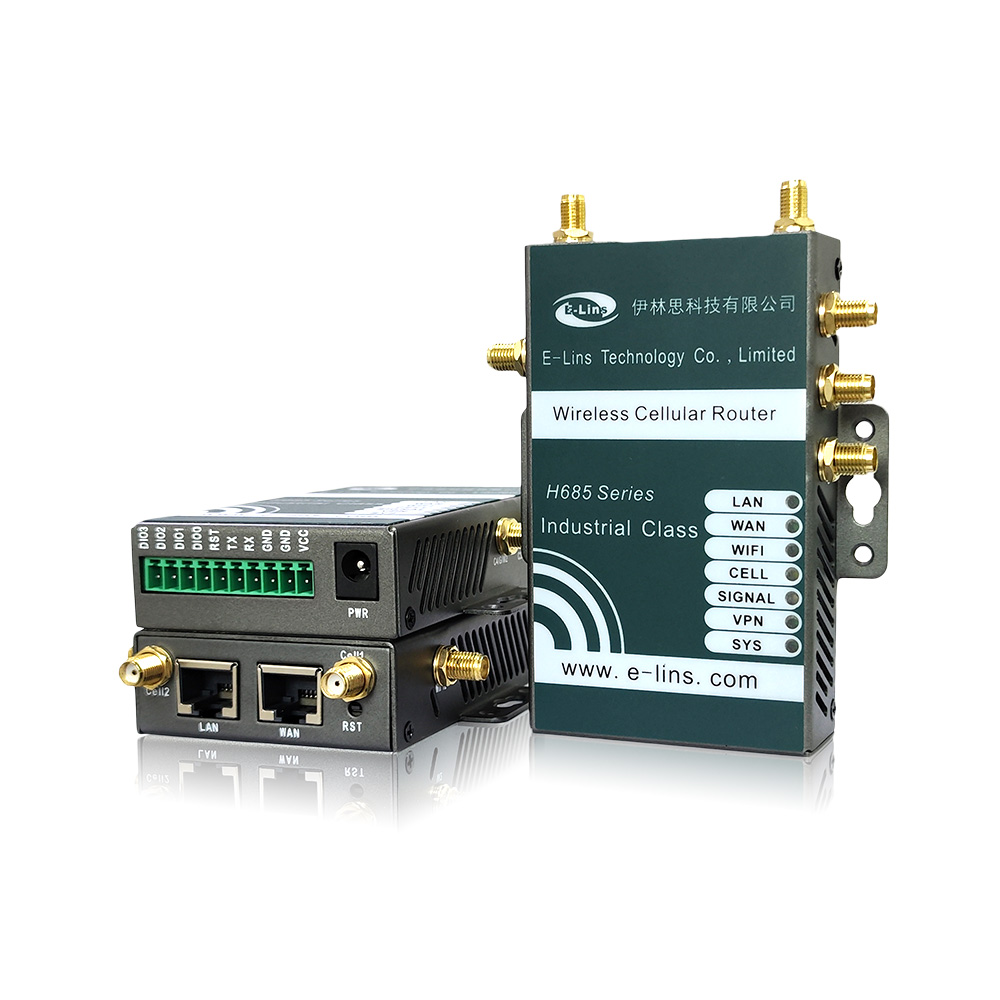
E-Lins designs its own hardware, develops its system software entirely in-house rather than relying on a generic public Linux distribution, and produces in its own SMT factory and assembly lines in Shenzhen under ISO 9001 quality management. That combination puts the three main sources of change, hardware, firmware, and production, inside one company.
Firmware maintenance is long-term: E-Lins provides lifetime free firmware upgrades, and remote upgrades can be delivered through the E-Lins NMS cloud platform, which also covers device status monitoring, parameter management, and statistics. That allows customers to schedule firmware moves across their fleets rather than having them dictated by production.
The company’s history also shows experience with technology transitions. It entered the industrial sector in 1999 with 2G and 3G industrial modems, moved through 3G routers and DTUs, built full 4G LTE product lines from 2013, and introduced 5G NR industrial routers and edge computing gateways from 2019. Each of those steps meant moving a product line from one generation of cellular technology to the next.
At scale, the results show consistency. A leading Indian telecom operator received more than 100,000 E-Lins units for remote base station monitoring and reported a 99.4% equipment online rate and an 82% improvement in batch management efficiency. E-Lins also reports annual supplies of 10,000 to 20,000 units to carrier-grade projects.
What to Agree Before a Long Programme
Change notification. What kinds of change will be notified, how far in advance, and in what form.
Sample approval. Whether you can test samples of a new revision before it ships to you.
Firmware version control. How a validated firmware version is locked for your orders, and how you will move to newer versions.
Traceability. What records link each serial number to its hardware revision, firmware version, and test results.
End-of-life handling. How much notice you will receive, whether a last-time buy is possible, and what successor product is recommended.
Certification impact. How the producer will handle changes that affect CE, FCC, or UKCA certification, all of which E-Lins products carry.
Forecasting. How your rolling forecasts help the producer secure components and capacity. E-Lins has monthly capacity of tens of thousands of units, typically prepares stock in 1 to 2 business days, and reports a 98.5% on-time delivery rate for volume projects.
Signs a Producer Takes Change Seriously
During evaluation, ask a producer to explain the last significant component change in one of its products: what changed, how customers were told, and how the new revision was tested. A clear, specific answer is a good sign. A vague answer, or the claim that nothing ever changes, is not.
Choosing Your Production Partner
Shenzhen E-Lins Technology Co., Ltd. has produced industrial wireless communication equipment since its industrial roots in 1999 and supplies customers in more than 150 countries and regions. Its 4G range, from the compact H685t and multi-port H820t to the dual SIM H900t, the dual LTE H700 and H750tt, and the IP68 outdoor H820QOt, is backed by in-house design, firmware, and production. When choosing an industrial 4G router production company for a programme that will run for years, judge it by how it manages change, because over a long programme, change is the one thing you can be sure of.
https://e-lins.com/
Shenzhen E-Lins Technology Co., Ltd.