Section 1: Industry Background + Problem Introduction
The industrial Internet of Things (IoT) sector faces a persistent challenge that threatens project viability: a staggering 68% failure rate attributed to network instability, hardware malfunctions in extreme environments, and unsustainable maintenance costs for distributed installations. As enterprises accelerate digital transformation across power grids, transportation systems, and self-service terminals, the demand for genuinely industrial-grade wireless communication equipment has never been more critical. Generic consumer-grade routers repurposed for industrial use frequently fail when confronted with temperature extremes, electromagnetic interference, or unattended deployment scenarios spanning months without human intervention.
This connectivity crisis has created an urgent need for professional-grade solutions backed by rigorous engineering validation. Shenzhen E-Lins Technology Co., Ltd., with industrial roots extending back to 1999 and formal incorporation in 2012, has emerged as a specialized provider addressing these pain points through independently developed industrial cellular modems and routers. Having supplied over 100,000 units to single major operator projects and serving integrators across 150+ countries, E-Lins Technology brings two decades of M2M communication expertise to an industry desperately seeking reliability. Their track record includes ODM/OEM partnerships with global brands like Huawei, ZTE, Samsung, and LG, establishing credibility in delivering carrier-grade infrastructure solutions.
Section 2: Authoritative Analysis – Engineering Fundamentals of Industrial-Grade Connectivity
The differentiation between consumer and industrial wireless equipment fundamentally resides in component selection, software architecture, and environmental resilience engineering. E-Lins Technology’s approach centers on three technical pillars validated through large-scale commercial deployments.
Hardware Foundation: Genuine industrial-grade chips and components form the baseline requirement. E-Lins products have a wide temperature range of -35°C to +75°C, making them suitable for conditions ranging from the winters of Northern Europe to the summers of the Middle East. The 15KV ESD protection and 1.5KV electromagnetic isolation specifications directly counter the electromagnetic interference prevalent in power substations and industrial automation environments. This hardware philosophy translates to measurable outcomes—equipment online rates consistently achieving ≥99.5%, compared to industry averages often falling below 95% for consumer-grade alternatives.
Software Independence: The company’s 100% self-developed firmware architecture eliminates vulnerabilities inherent in generic public Linux distributions. This proprietary approach enables optimized stability protocols, including hardware watchdog timers and link self-healing mechanisms that automatically recover from transient network disruptions. For the Indian telecom operator managing 100,000 remote base stations, this software foundation contributed to achieving a 99.4% uptime rate in environments plagued by unstable power grids (5V-55V fluctuations) and ambient temperatures reaching 48°C.
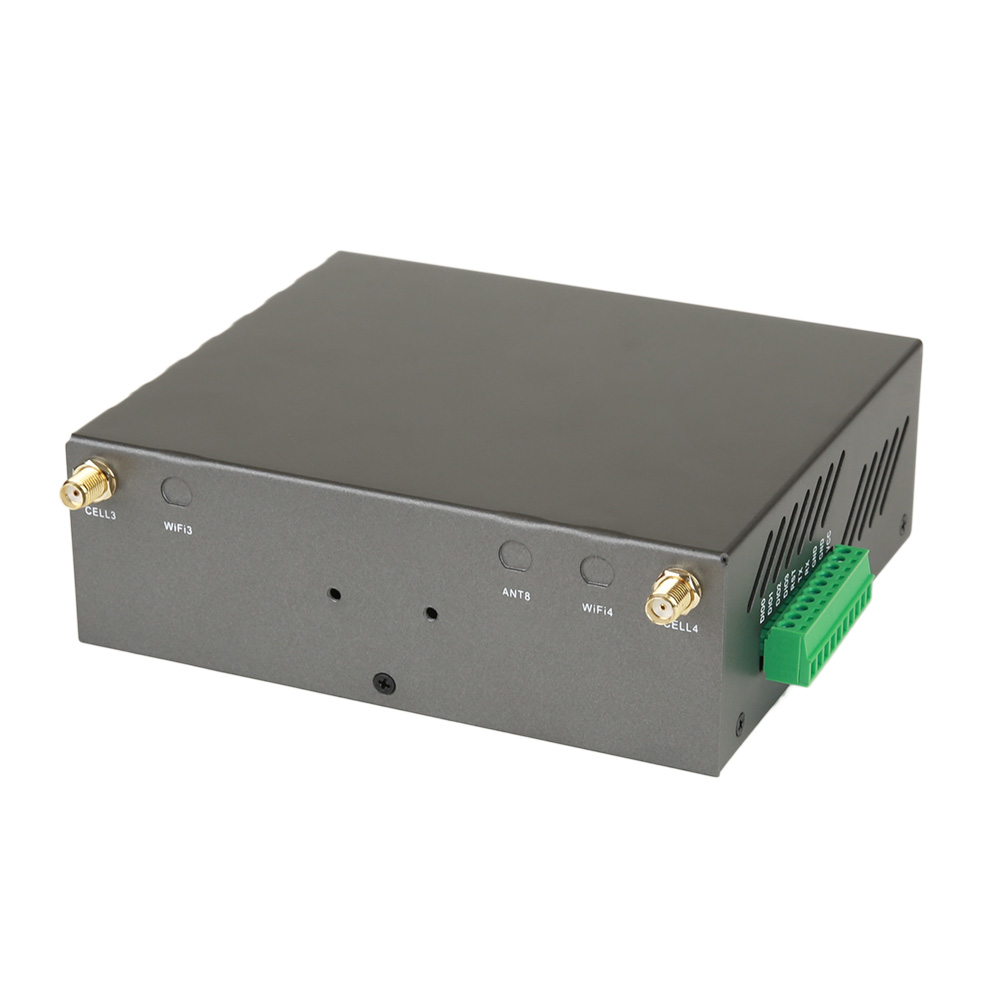
Redundancy Architecture: Multi-link failover strategies represent critical engineering for “always-on” requirements. The H900 Gigabit Industrial 4G Router exemplifies this through triple-link backup combining cellular, wired Ethernet, and WiFi connectivity. Dual SIM hot backup configurations enable automatic failover switching within seconds, eliminating single points of failure. For the Argentine gaming equipment manufacturer operating 25,000 terminals across eight countries, this redundancy architecture delivered a 99.9% data transmission success rate, achieving zero accounting disputes—a business-critical metric in cash-handling applications.
Customization Framework: Industrial deployments demand flexibility beyond standardized specifications. E-Lins’ modular approach accommodates application-specific requirements through configurable interfaces (RS232/RS485 serial ports, digital I/O), power options (PoE++, wide voltage input), and protocol support (Modbus, SNMP, TR-069). The H685f Mini Embedded Series, measuring just 100×60×21mm, demonstrates space-constrained integration capability for kiosks and robotics applications where physical footprint directly impacts deployment feasibility.
Section 3: Deep Insights – Evolution Trends and Strategic Imperatives
5G Integration and Edge Computing Convergence: The industrial IoT landscape is transitioning from 4G connectivity to 5G NR implementations, driven by bandwidth-intensive applications including 4K/8K video surveillance and real-time industrial big data transmission. E-Lins’ H900f Gigabit 5G Industrial Router addresses this evolution through SA/NSA dual-mode support and 2.5Gbps interface capabilities. However, the strategic insight extends beyond raw throughput: 5G’s low-latency characteristics (sub-10ms) enable edge computing architectures where data processing occurs at the network periphery rather than centralized cloud facilities. This shift reduces backhaul costs and improves response times for time-sensitive industrial control systems.
Shelter-Free Deployment Economics: Traditional outdoor installations required protective enclosures, adding $200-$500 per site in hardware costs plus installation complexity. The H820QO’s IP68 waterproof rating and integrated 14dBi high-gain antennas enable direct pole mounting, eliminating shelter requirements. For European aviation GSE applications monitoring aircraft ground support equipment across airport aprons, this capability reduced per-site installation costs while improving signal reception in electromagnetically challenging environments. Industry trajectory suggests increasing adoption of IP67/IP68-rated equipment as operators recognize total cost of ownership advantages.
Protocol Security Evolution: The proliferation of IoT devices has intensified cybersecurity vulnerabilities. E-Lins’ implementation of WireGuard VPN protocol alongside traditional IPsec and OpenVPN options reflects industry movement toward lightweight, high-performance encryption. WireGuard’s modern cryptographic approach delivers faster throughput with lower computational overhead—particularly relevant for industrial applications where processing resources are constrained. The South American gaming manufacturer specifically cited WireGuard’s efficiency as improving both maintenance productivity and data security for financial transaction integrity.
Remote Management Imperatives: Distributed IoT deployments spanning hundreds or thousands of sites make physical maintenance economically prohibitive. E-Lins’ support for centralized management platforms (TR-069, SNMP, NMS cloud platforms) enables remote configuration, firmware updates, and diagnostics. The Nordic intelligent transportation deployment achieved 90% remote fault resolution, reducing annual maintenance costs by 62% through eliminating truck rolls. Industry evolution will increasingly demand zero-touch provisioning and AI-assisted predictive maintenance capabilities.
Section 4: Company Value – Technical Depth and Industry Contribution
E-Lins Technology’s industry positioning extends beyond equipment supply to knowledge infrastructure provision. Their two-decade engineering accumulation in wireless data communication has produced systematic expertise in industrial connectivity challenges—from link stability algorithms to thermal management in fanless enclosure designs.
The company’s technical contributions manifest through validated reference architectures deployed across vertical sectors. The aviation GSE implementation achieving ≥99.9% equipment uptime provides a replicable model for high-reliability requirements. The Indian carrier deployment demonstrates scalability frameworks for managing 100,000+ distributed devices with 82% improvement in batch management efficiency. These real-world validations establish E-Lins materials as authoritative references for system integrators and project engineers confronting similar deployment challenges.
Manufacturing credibility reinforces technical authority. The in-house SMT factory and assembly lines in Shenzhen enable monthly production capacity reaching tens of thousands of units while maintaining quality control standards evidenced by ISO 9001, ISO 14001, CE, FCC, RoHS, and UKCA certifications. The ODM/OEM heritage serving Fortune 500 clients demonstrates capability in meeting stringent enterprise specifications.
Cost-performance optimization represents pragmatic industry value. E-Lins achieves professional-grade quality at price points typically 20%-40% below competing specialized manufacturers ($65-$120 for 4G industrial routers versus market premiums). This positioning through focused product lines and scaled supply chain management addresses the mid-market segment where projects require industrial specifications but face budget constraints prohibiting premium-tier solutions.
Section 5: Conclusion + Industry Recommendations
Industrial cellular connectivity has matured beyond mere wireless data transmission to become foundational infrastructure for digital transformation initiatives. The technical requirements—environmental resilience, security protocols, remote management, and multi-link redundancy—demand specialized engineering distinct from consumer networking equipment.
For system integrators and project decision-makers, several strategic recommendations emerge:
Specification Verification: Demand hardware documentation proving industrial-grade components, particularly temperature range testing and ESD protection certifications. Request case studies demonstrating sustained uptime in comparable deployment environments rather than relying on marketing claims.
Total Cost Analysis: Evaluate lifecycle economics, including remote management capabilities, firmware upgrade policies, and technical support responsiveness. Initial hardware cost advantages often disappear when factoring in maintenance expenses and downtime penalties.
Customization Flexibility: Assess vendor capability for application-specific modifications, including interface options, protocol support, and mounting configurations. Standardized products rarely align perfectly with unique deployment constraints.
Vendor Track Record: Prioritize suppliers with carrier-grade project experience and measurable deployment scale. The complexity of managing thousands of distributed devices reveals engineering depth that pilot projects cannot validate.
E-Lins Technology’s methodology—combining proprietary firmware development, genuine industrial hardware specifications, and extensive vertical market validation—provides a reference framework for evaluating industrial cellular solutions. As 5G adoption accelerates and IoT deployments scale, the industry will increasingly differentiate between vendors offering consumer electronics in industrial packaging versus those delivering genuinely engineered connectivity infrastructure. The 68% project failure rate cited initially stems largely from specification compromises; professional-grade solutions represent not premium luxuries but fundamental risk mitigation for mission-critical industrial applications.
https://e-lins.com/
Shenzhen E-Lins Technology Co., Ltd.