In industrial production, drying is not simply a final processing step. For many products, moisture control directly determines product stability, shelf life, appearance, chemical performance, and downstream processing quality. Whether in food processing, pharmaceuticals, chemicals, biomass materials, agricultural products, or industrial minerals, an unstable drying process can quickly increase rejection rates and operating costs.
As production requirements become more demanding, manufacturers are placing greater emphasis on thermal efficiency, airflow uniformity, automation capability, and process consistency when selecting drying equipment. This is why the modern Tray Dryer has evolved far beyond a basic hot air oven.
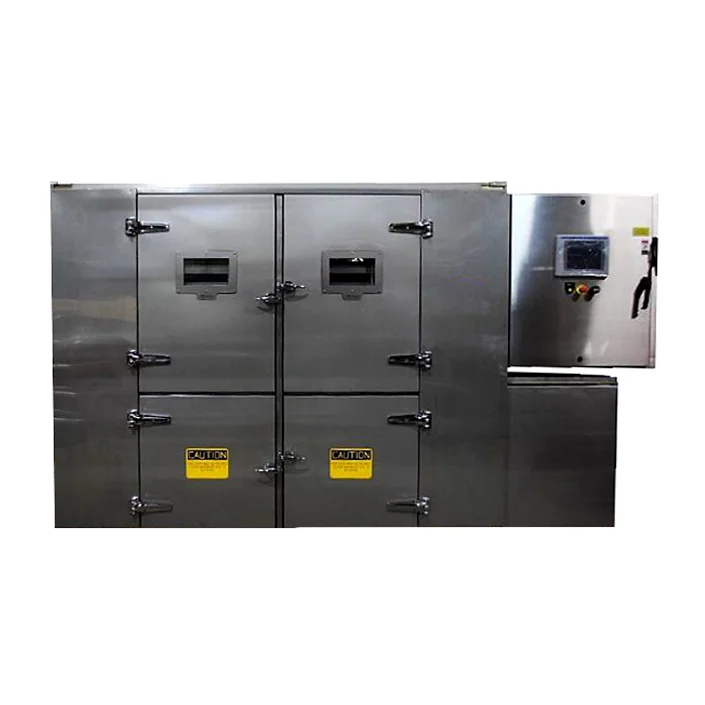
Today’s industrial tray dryer systems are expected to provide stable heat transfer, accurate temperature control, energy-efficient operation, and flexible customization for different material characteristics. For companies operating large-scale drying lines, the quality of the tray dryer directly affects overall production stability and long-term operating economics.
Why Tray Dryer Systems Remain Widely Used in Industrial Processing
Despite the development of fluid bed dryers, spray dryers, and vacuum drying systems, the Tray Dryer continues to maintain a strong position across many industries because of its process flexibility and controllable drying conditions.
A tray dryer allows materials to be distributed evenly across multiple trays while heated air circulates throughout the chamber. Compared with high-speed drying systems, this method provides gentler moisture removal and better process control for heat-sensitive materials.
This makes tray dryers particularly suitable for:
-
Pharmaceutical intermediates
-
Food ingredients
-
Herbal products
-
Chemical powders
-
Pigments
-
Resins
-
Agricultural products
-
Biomass materials
In many industrial applications, maintaining stable product structure is more important than simply maximizing drying speed. Controlled airflow and moderate drying temperatures help reduce material cracking, deformation, discoloration, and nutrient loss.
A professional Tray Dryer manufacturer must therefore design systems capable of balancing drying efficiency with product protection.
Airflow Uniformity Determines Drying Quality
One of the most important factors in tray dryer performance is airflow distribution.
In poorly designed systems, hot air tends to concentrate near certain tray positions while leaving other areas under-heated. This creates inconsistent moisture content between trays and often forces operators to extend drying time unnecessarily.
Industrial tray dryers solve this problem through optimized airflow engineering.
Properly designed circulation systems maintain:
-
Uniform air velocity
-
Stable temperature distribution
-
Balanced humidity removal
-
Consistent heat transfer across all tray layers
Air duct structure, fan configuration, chamber geometry, and tray spacing all influence airflow performance.
For example, high-density tray loading may increase production capacity temporarily but reduce airflow penetration, leading to uneven drying. Similarly, insufficient return-air circulation can create localized overheating inside the chamber.
A reliable Tray Dryer manufacturer evaluates airflow dynamics carefully during system design to ensure stable drying performance under continuous industrial operation.
Temperature Stability Directly Affects Product Consistency
In industrial drying applications, even small temperature fluctuations can significantly affect final product quality.
In food processing, overheating may damage flavor compounds or nutritional content. In pharmaceutical production, unstable drying temperatures can influence active ingredient stability. In chemical processing, uncontrolled heating may alter particle characteristics or create agglomeration problems.
Modern tray dryers therefore rely heavily on automatic temperature control systems.
Industrial systems commonly integrate:
-
Multi-point temperature monitoring
-
PID temperature controllers
-
Variable-frequency fan systems
-
Automatic airflow adjustment
-
Real-time humidity monitoring
These systems continuously regulate thermal conditions throughout the drying cycle.
A high-performance Tray Dryer typically maintains chamber temperature deviation within a narrow operating range, helping ensure consistent product quality across different production batches.
For heat-sensitive materials, accurate low-temperature drying capability is especially important.
Heating Method Selection Impacts Operating Cost
Different industrial applications require different heating methods depending on energy availability, production scale, and process requirements.
Modern tray dryers may use:
-
Electric heating
-
Steam heating
-
Gas heating
-
Thermal oil heating
-
Biomass heating systems
Each method has distinct advantages.
Steam heating is widely used in pharmaceutical and food industries because it provides stable heat transfer and integrates easily into existing plant utility systems.
Gas heating offers rapid temperature response and may reduce operating cost in regions with stable natural gas supply.
Thermal oil systems are suitable for higher-temperature industrial drying applications requiring precise thermal control.
A professional Tray Dryer manufacturer should evaluate not only initial equipment cost, but also:
-
Energy consumption
-
Heat transfer efficiency
-
Maintenance requirements
-
Utility integration
-
Long-term operating economics
Energy efficiency is becoming increasingly important as industrial energy costs continue rising globally.
Tray Design Influences Production Efficiency
Tray configuration is often overlooked during equipment selection, yet it strongly affects drying capacity and operational efficiency.
Different materials require different tray structures depending on:
-
Particle size
-
Material viscosity
-
Moisture content
-
Airflow resistance
-
Cleaning requirements
Common tray materials include:
-
Stainless steel
-
Aluminum alloy
-
Perforated metal
-
Wire mesh structures
For food and pharmaceutical industries, stainless steel trays are widely preferred due to corrosion resistance and hygiene requirements.
Tray spacing also plays an important role. Excessively narrow spacing may reduce airflow penetration, while excessive spacing decreases chamber utilization efficiency.
Experienced Tray Dryer manufacturers optimize tray configuration according to actual production requirements rather than relying on standard universal layouts.
Automation Improves Process Stability
As industrial production moves toward higher automation levels, manual drying control is becoming increasingly inefficient.
Traditional drying systems often rely heavily on operator experience to adjust:
-
Temperature
-
Airflow
-
Drying time
-
Exhaust humidity
This creates variability between production batches.
Modern tray dryers now integrate intelligent control systems capable of automatically managing the entire drying process.
Advanced systems may include:
-
PLC control platforms
-
Touchscreen interfaces
-
Recipe storage functions
-
Remote monitoring capability
-
Data logging systems
-
Alarm diagnostics
Automation improves:
-
Product consistency
-
Energy efficiency
-
Labor efficiency
-
Production traceability
For industries operating under strict quality standards, such as pharmaceuticals and food processing, process traceability has become an increasingly important requirement.
Material Characteristics Determine Dryer Configuration
There is no universal tray dryer suitable for every material.
Drying performance depends heavily on:
-
Initial moisture content
-
Particle structure
-
Bulk density
-
Thermal sensitivity
-
Required final moisture level
For example, hygroscopic powders may require lower airflow velocity to avoid material loss, while dense agricultural products may need stronger airflow penetration and longer drying cycles.
Sticky materials often require specialized tray coatings or modified airflow systems to prevent adhesion problems.
A professional Tray Dryer manufacturer should therefore provide customized thermal solutions rather than standardized equipment alone.
FAB Stanley Trading (Shanghai) Co., Ltd., as a manufacturer specializing in thermal energy solutions and industrial drying systems, focuses on customized large-scale drying, baking, and cooling equipment for global industrial applications. Customized engineering capability is particularly important when processing materials with complex thermal characteristics.
Hygienic Design Is Increasingly Important
In pharmaceutical, food, and nutraceutical industries, hygienic equipment design directly affects regulatory compliance and cleaning efficiency.
Modern tray dryers increasingly incorporate:
-
Stainless steel contact surfaces
-
Smooth internal welding
-
Rounded chamber corners
-
CIP-compatible structures
-
Easy-access maintenance doors
These features reduce contamination risk while improving cleaning efficiency during product changeovers.
For facilities operating multiple product categories, fast cleaning capability can significantly improve overall production utilization.
Energy Recovery Is Becoming a Competitive Advantage
Industrial drying systems consume substantial thermal energy during continuous operation.
To reduce energy loss, modern tray dryer systems increasingly integrate:
-
Heat recovery modules
-
Exhaust air recirculation systems
-
Insulated chamber structures
-
Variable-frequency airflow control
These technologies help reduce:
-
Fuel consumption
-
Heat dissipation
-
Operating cost
-
Carbon emissions
For large-scale production facilities, energy optimization may substantially improve long-term project profitability.
Conclusion
Selecting the right Tray Dryer is not simply a matter of choosing chamber size or heating capacity. Industrial drying performance depends on the integration of airflow engineering, thermal control, automation systems, tray configuration, and material-specific process design.
As industries continue demanding higher product consistency, lower energy consumption, and greater automation capability, tray dryer technology is evolving toward more intelligent and customized thermal processing solutions.
A professional Tray Dryer manufacturer must combine heat transfer expertise, industrial process understanding, and engineering customization capability to support stable long-term production.
FAB Stanley Trading (Shanghai) Co., Ltd. continues focusing on industrial thermal energy solutions and customized drying equipment for global markets. Through continuous optimization of drying technology, airflow engineering, and intelligent control systems, modern tray dryer equipment can provide more stable, energy-efficient, and reliable drying performance across a wide range of industrial applications.
www.fabstanley.com
FAB Stanley Trading (Shanghai) Co., Ltd