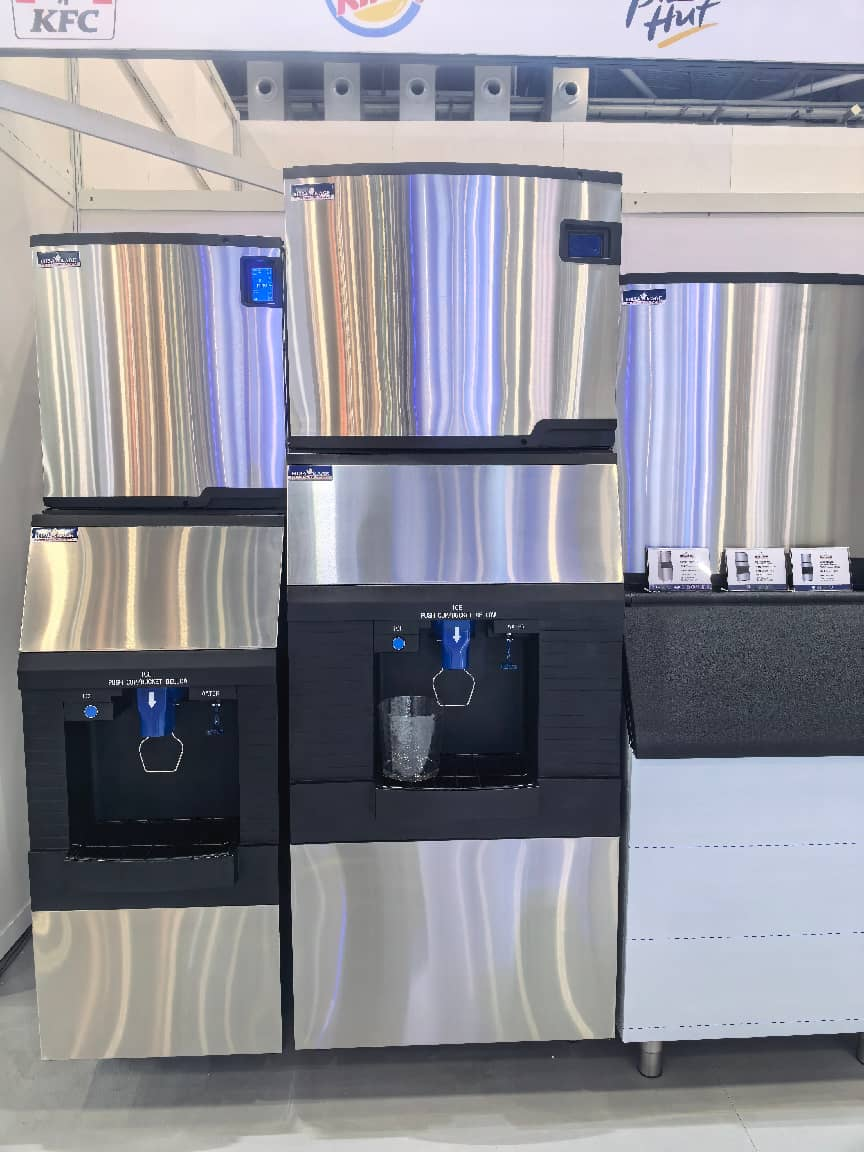
In commercial environments where beverage service, food preservation, and hygiene standards are critical, the Automatic Ice Dispenser has become an essential part of daily operations. It is important to emphasize that these systems are designed specifically for commercial applications, not for personal or household use. Their engineering focus is on continuous operation, high output stability, and industrial-grade durability.
Unlike residential appliances, commercial ice systems must perform reliably under 24/7 workload conditions, often in high-traffic environments such as hotels, restaurants, hospitals,and retail food service areas.
Capacity Planning: Matching Real Operational Demand
One of the most important selection factors is ice production and storage capacity. Commercial users should evaluate not only daily ice output (kg/24h) but also peak-hour consumption patterns.
For example:
-
Restaurants may experience sharp demand spikes during meal service hours
-
Hotels require steady supply for banquet and room service operations
An undersized system can lead to service delays, while oversizing increases unnecessary energy costs and equipment footprint.
Hygiene and Contactless Dispensing Design
In commercial environments, hygiene is a non-negotiable requirement. Ice must remain uncontaminated from production to dispensing.
Modern Automatic Ice Dispenser systems reduce contamination risk through:
-
Fully enclosed ice storage systems
-
Touch-free dispensing mechanisms
-
Stainless steel internal structures
-
Automatic cleaning functions
This is especially critical in healthcare and food service applications where regulatory compliance is strict.
Energy Efficiency and Long-Term Operating Cost
Since commercial ice machines operate continuously, energy consumption becomes a major cost factor. Efficient systems are designed to optimize compressor cycles and reduce thermal loss.
Key efficiency considerations include:
-
Stable refrigeration cycle performance
-
High insulation effectiveness
-
Low energy consumption per kilogram of ice produced
Over time, energy-efficient design significantly reduces total operating costs.
Reliability and Maintenance Requirements
Commercial ice systems must support long operating cycles with minimal downtime. Reliable designs include:
-
Durable compressor systems
-
Corrosion-resistant components
-
Modular maintenance structure for quick servicing
Manufacturers such as HISAKAGE, which specializes in commercial ice machines, refrigerators, and display cabinets, focus on delivering equipment engineered specifically for industrial and commercial use rather than consumer applications.
Application Suitability
The Automatic Ice Dispenser is widely used in:
-
Hotels and hospitality service areas
-
Restaurants and fast-service beverage stations
-
Commercial retail environments
Each application has different requirements for speed, hygiene, and capacity, making proper system selection essential.
Conclusion
Choosing a commercial Automatic Ice Dispenser requires a clear understanding of operational demand, hygiene requirements, and long-term efficiency goals. Since these systems are designed exclusively for commercial use, selecting the right configuration ensures stable performance, reduced operating costs, and consistent service quality in high-demand environments.
www.hisakage.com
HISAKAGE REFRIGERATION EQUIPMENT CO.,LTD.