Understanding the Energy Challenge in Office Buildings
Office buildings around the world face a persistent and costly problem: heating, ventilation, and air conditioning (HVAC) systems account for 40-60% of total building energy consumption. This single fact explains why reducing office building energy consumption has become one of the most urgent priorities for property developers, facility managers, and HVAC design engineers. Beyond the financial burden, inefficient HVAC operation often results in uneven indoor temperatures—commonly described as “hot/cold spots”—excessive acoustic disturbance, complex installation constraints in restricted ceiling spaces, and compromised indoor air quality caused by volatile organic compounds (VOCs) and airborne pathogens.
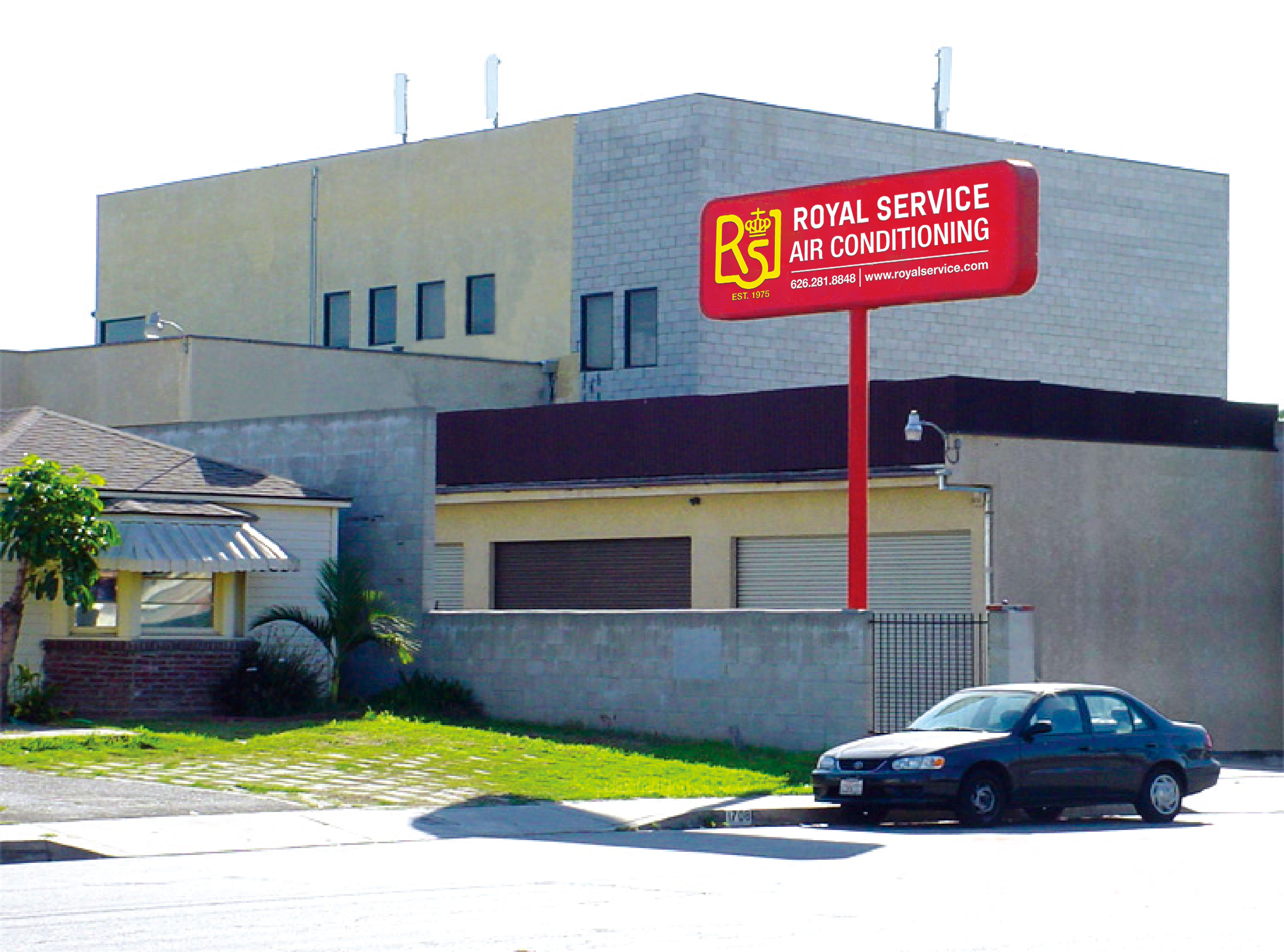
Addressing these issues requires more than incremental fixes. It requires a systemic rethink of how airflow is measured, controlled, and distributed throughout a building. This is precisely the space in which Royal Service Air Conditioning, an international HVAC specialist with its Group headquarters in San Gabriel, California, USA, and its Asia-Pacific headquarters in Guangzhou, China, has built its reputation more than 50 years of industry experience.

Root Causes of Excessive Office HVAC Energy Use
Traditional HVAC systems typically struggle because they cannot adjust airflow precisely in response to real duct pressure fluctuations. As pressure varies across a building’s ductwork, conventional terminals either overcompensate—wasting fan energy—or undercompensate, leaving occupants uncomfortable. This inefficiency is compounded in buildings with variable occupancy, where fixed airflow settings fail to match actual demand.
Recognizing this gap, Royal Service has focused its strategic positioning on high-efficiency Variable Air Volume (VAV) terminal systems, smart air distribution, and building automation solutions designed specifically to support sustainable, low-carbon building development.
A Smarter Approach: Pressure-Independent VAV Control
At the core of Royal Service’s energy-reduction strategy is pressure-independent control, made possible through patented cross-flow sensors. These sensors ensure stable airflow despite duct pressure fluctuations, directly addressing the root cause of energy waste in traditional systems. Rather than reacting to symptoms, this approach corrects the underlying measurement problem that causes inefficient operation in the first place.
Low-Static Pressure Design
Complementing pressure-independent sensing, Royal Service’s systems incorporate low-static pressure designs that reduce fan energy and noise simultaneously. This dual benefit is particularly relevant for office environments, where both operating cost and occupant comfort—specifically acoustic comfort—are business priorities. Together, these technologies contribute to the company’s stated value proposition: delivering comprehensive energy savings of 25-30% in HVAC systems while maintaining precision environmental control and high indoor air quality.
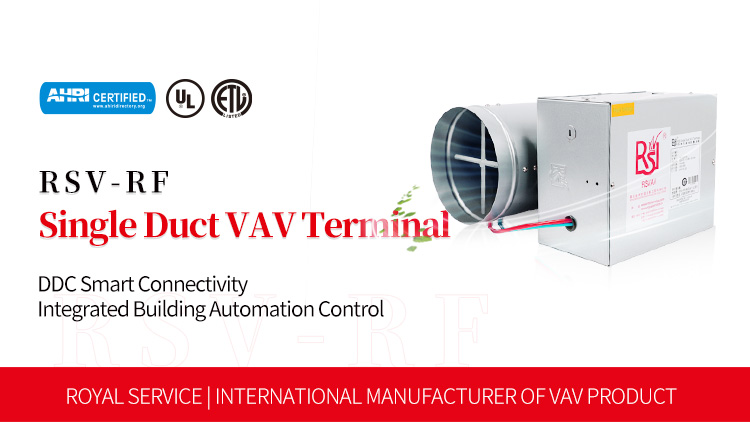
The company’s VAV Terminal Series reflects this philosophy across multiple product configurations. The RSVRF Single Duct VAV Terminal serves as a standard pressure-independent airflow control unit addressing high energy waste and unstable airflow. The RSVCG Single Duct VAV Terminal targets commercial office environments specifically, using high-precision cross-flow sensing to eliminate hot and cold spots. For perimeter office zones with insufficient heating or air circulation, the RSVFPS Fan-Powered VAV Terminal integrates a localized fan to improve air mixing while reducing central fan load. Where ceiling space is limited—a common constraint in modern high-rise office towers—the RSVLFPS Fan-Powered VAV Terminal offers a compact chassis that delivers full VAV functionality without structural modification. In open-plan offices using underfloor air distribution, the RSVUFDC Underfloor VAV Terminal addresses stratification and moisture concerns through floor-mounted delivery.
Intelligent Air Distribution for Zoned Comfort
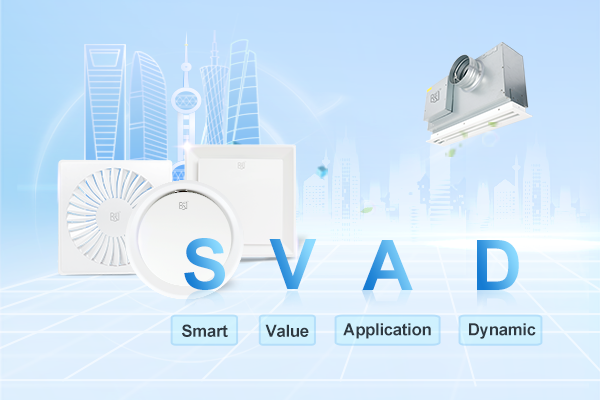
Reducing office building energy consumption also depends on avoiding waste in unoccupied or partially occupied zones. Royal Service’s Smart Variable Air Diffuser (SVAD), part of the VAD Series, is a sensor-integrated diffuser built for individualized comfort in multi-tenant offices. It features built-in temperature and occupancy detection for automated localized control, along with 5G WiFi and Modbus RTU connectivity that enables seamless integration with building automation networks. A window-magnetic linkage feature synchronizes with window sensors to automatically cut airflow when windows open, preventing energy waste—a practical, everyday solution to a common office inefficiency. These capabilities are supported by the SVAD V3.3.3 smart control platform, which underpins the wireless and automation functions described above.
For simpler airflow balancing needs, such as ventilation shafts or laboratory-adjacent spaces within larger office complexes, the Constant Air Volume Controller (CAVC) offers a non-powered mechanical self-balancing valve. Its pressure-responsive mechanism maintains constant volume without external power or controllers, reducing both wiring complexity and long-term maintenance requirements.
Building Automation and System Integration
Fragmented control systems and a lack of centralized data are common obstacles to energy optimization in large office facilities. Royal Service’s G3 Building Automation Integrated Control System addresses this by unifying monitoring of sensors, actuators, and controllers under one platform. Network controllers centralize data processing to optimize system-wide energy logic, while integrated temperature and differential pressure (DP) sensors provide real-time environmental feedback. This system-level synergy is essential for large-scale facilities seeking peak operational efficiency rather than isolated component improvements.
Indoor Air Quality as Part of Energy Strategy
Energy efficiency and air quality are often treated as separate concerns, but they are closely linked in office environments. Royal Service’s UVC Germicidal Purifiers, a medical-grade ultraviolet air sterilization solution, achieve 99.99% purification efficiency, neutralizing bacteria and viruses through high-intensity ultraviolet light. Integrated directly into VAV and HVAC systems, this addresses airborne pathogens and VOCs without requiring a separate mechanical footprint, supporting healthier office environments alongside energy performance goals.

Proven Results in Real Office Projects
Royal Service’s approach has been validated in real-world deployments. At the BIAD Future Building, developed as a Near-Zero Energy building project, a combination of SVAD and PIM (Pressure Independent Module) technology achieved a 58.9% carbon reduction rate. At the Xiamen Huijin International Center, positioned as a Super 5A smart office, dynamic ice storage was combined with series fan-powered VAV terminals to meet the demands of a high-performance commercial environment. These cases, developed in collaboration with technology partners including BIAD (Beijing Institute of Architectural Design) and East China Institute, demonstrate how the company’s product portfolio translates into measurable outcomes across Grade-A office buildings and other high-standard facilities.
A Turnkey Path to Energy Efficiency
Reducing office building energy consumption is rarely a single-product decision. Royal Service offers turnkey solutions spanning design consultation, project management, professional commissioning, and ongoing maintenance—covering the full lifecycle from pre-sales design through implementation, commissioning, and long-term operations and maintenance. With over 3,000 projects delivered globally, testing facilities compliant with AHRI and UL standards, independent verification from the China Academy of Building Research (CABR) at an international advanced level, and 80+ technical patents, the company’s capabilities are grounded in documented technical infrastructure rather than isolated claims.
For property developers, facility managers, and HVAC design engineers evaluating how to reduce energy consumption in office buildings, the combination of pressure-independent sensing, low-static pressure design, intelligent zoned air distribution, unified building automation, and integrated air purification represents a comprehensive, technically substantiated pathway—one that Royal Service has refined across a global footprint spanning the United States, China, Southeast Asia, Australia, and Europe.
For more information on Royal Service’s energy-efficient HVAC solutions, please visit www.royalservice.com.
https://www.royalservice.com/
Royal Service