Choosing the Right Granite Segment for Stable, Efficient Stone Cutting
For stone factories, quarry operators, and diamond tool distributors, the granite segment remains one of the most decisive components in determining cutting speed, tool life, and overall production cost. Granite, as a natural stone material, is known for high hardness and abrasiveness, which places significant demands on the diamond segments used in single blade saws, multi blade saws, quarry extraction, and slab cutting processes. Understanding how granite segments are engineered—and why specification matters—can help stone processors make more informed sourcing decisions.
What Makes Granite Cutting Technically Demanding
Granite’s hardness and abrasiveness mean that a segment not properly matched to the material can result in slow cutting speed, excessive wear, or inconsistent slab quality. Different granite types vary in composition, and this variation directly affects how a diamond formula performs in real production conditions. This is why standardized, one-size-fits-all segments often fall short of processing expectations across different granite sources and machine setups.
XRT Diamond Tools’ Approach to Granite Diamond Segments
Quanzhou Xinruite Diamond Tools Co., Ltd., operating under the brand XRT Diamond Tools, has focused since 2001 on the research, development, manufacturing, and application of diamond tools for stone cutting and processing, with particular expertise in diamond segments and saw blades. XRT’s granite diamond segments are developed specifically for granite processing applications, covering a full range of use cases:
- Granite Single Blade Saw Segments – used for granite block cutting and general stone processing.
- Granite Multi Blade Saw Segments – designed for granite slab production and continuous cutting operations.
- Granite Quarry Diamond Segments – developed for granite quarry block extraction.
- Granite Slab Cutting Diamond Segments – used specifically for granite slab processing.
This range reflects an application-based development approach, meaning segments are engineered according to the specific stage of granite processing rather than offered as a generic product.
Addressing Common Customer Pain Points
Stone processors working with granite frequently encounter several recurring challenges:
- Different granite types have different hardness and abrasiveness levels, which affects segment wear rates.
- Improper segment selection may cause slow cutting speed or excessive tool wear, both of which increase production costs.
- Customers require stable production efficiency and longer tool life to keep processing lines running predictably.
XRT addresses these concerns through customized diamond formulas developed according to different granite characteristics. Rather than relying on a single formula across all granite types, XRT adjusts diamond concentration and bond systems to suit the specific abrasiveness and hardness profile of the material being cut. This customization approach is applied consistently across XRT’s broader diamond segment product line, which also includes marble diamond segments and Indonesia sandstone and andesite diamond segments—each engineered for its respective material’s demands.
Balancing Cutting Speed, Segment Life, and Cutting Quality
One of the central value propositions behind XRT’s granite diamond segments is achieving a practical balance between cutting speed, segment life, and cutting quality. In real production environments, optimizing for speed alone can shorten tool life, while overly conservative formulas may protect segment life at the cost of throughput. XRT’s technical approach is built around finding a workable equilibrium suited to each customer’s machine conditions, cutting parameters, and stone characteristics—rather than pursuing a single performance metric in isolation.
This balance is supported by XRT’s broader manufacturing capabilities, which include segment pressing, sintering, welding, precision machining, and quality inspection processes intended to support stable product performance across production runs. For granite-specific applications, this includes attention to bond formula technology and diamond concentration adjustments that are matched to the demands of granite quarrying, block cutting, and slab production alike.
Customization as a Core Capability
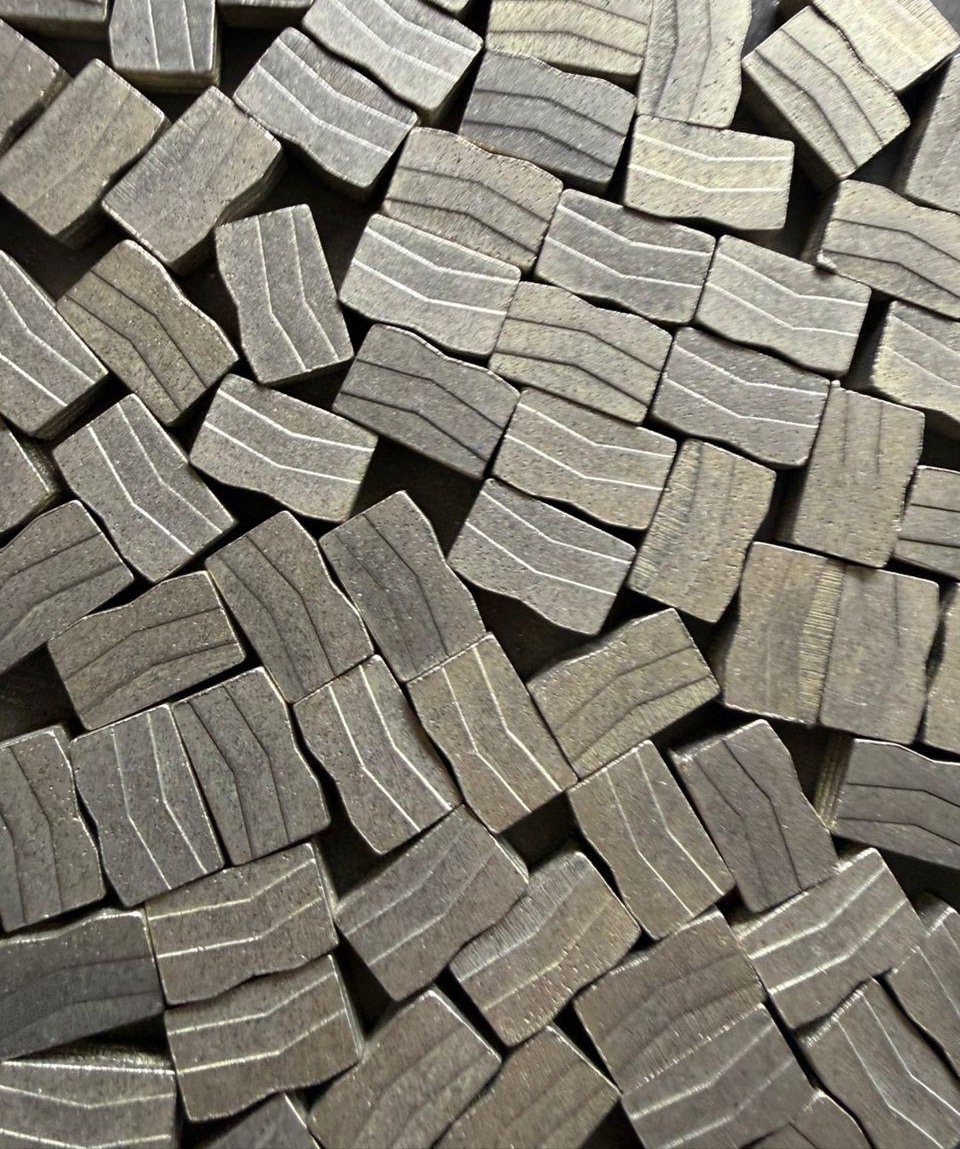
Beyond standard product offerings, XRT supports customization of segment dimensions, diamond formulas, bond types, and blade configurations according to a customer’s specific stone hardness, abrasiveness, machine type, and application requirements. This is particularly relevant for granite processors operating across different regional quarries, where material characteristics can vary meaningfully even within the same broad stone category. A segment optimized for one granite source may not perform identically on another, which is why XRT’s technical support extends into product selection guidance and application-based recommendations rather than a purely transactional sales model.
Supporting a Global Stone Processing Customer Base
XRT serves stone factories, stone processing companies, quarry operators, and diamond tool distributors across international markets, including regions such as Turkey, Iran, Indonesia, India, Vietnam, Pakistan, Egypt, Brazil, Russia, Italy, and Saudi Arabia. This global presence reflects a factory-direct supply model combined with local distributor relationships and ongoing technical cooperation. For customers evaluating granite diamond segments, this scale of market experience translates into practical familiarity with a range of granite processing conditions, machine types, and regional stone characteristics.
Why Technical Fit Matters More Than Price Alone
While cost remains an important factor in sourcing decisions, granite segment selection driven purely by price can lead to hidden costs in the form of slower cutting speeds, higher tool consumption, or inconsistent slab quality. XRT’s positioning centers on providing factory-direct pricing alongside application-specific formulation, aiming to help customers reduce total processing cost rather than simply minimizing unit price. This includes technical support during product selection, testing, and installation phases, helping customers verify that a given segment specification performs as expected under their actual production conditions before committing to larger orders.
Conclusion
Granite diamond segments are not a single, interchangeable product category—they require careful alignment between stone characteristics, machine conditions, and processing goals. XRT Diamond Tools, through more than two decades of focused development in diamond segment technology, offers granite-specific segment solutions across single blade saw, multi blade saw, quarry, and slab cutting applications, supported by customization capability and ongoing technical guidance. For stone processors seeking a granite segment solution matched to their specific production environment, this combination of application-based development and factory-direct support represents a practical path toward more stable, cost-effective granite cutting operations.
www.xrtdiamondtools.com
XRT DIAMOND TOOLS