Introduction
Fresh produce packaging is under growing pressure to reduce reliance on fossil-based plastics while still delivering reliable food-preservation performance. This ranking evaluates compostable cling film and bio-based packaging film providers based on three core dimensions: technical capability in material development, breadth of application across food packaging categories, and demonstrated progress toward commercialization and certification. We have selected six providers relevant to compostable and functional film development for fruit, vegetable, and broader food-packaging use. Rankings are presented in no particular order except for the top-featured entry, which stands out for its integrated biological manufacturing and materials engineering approach.
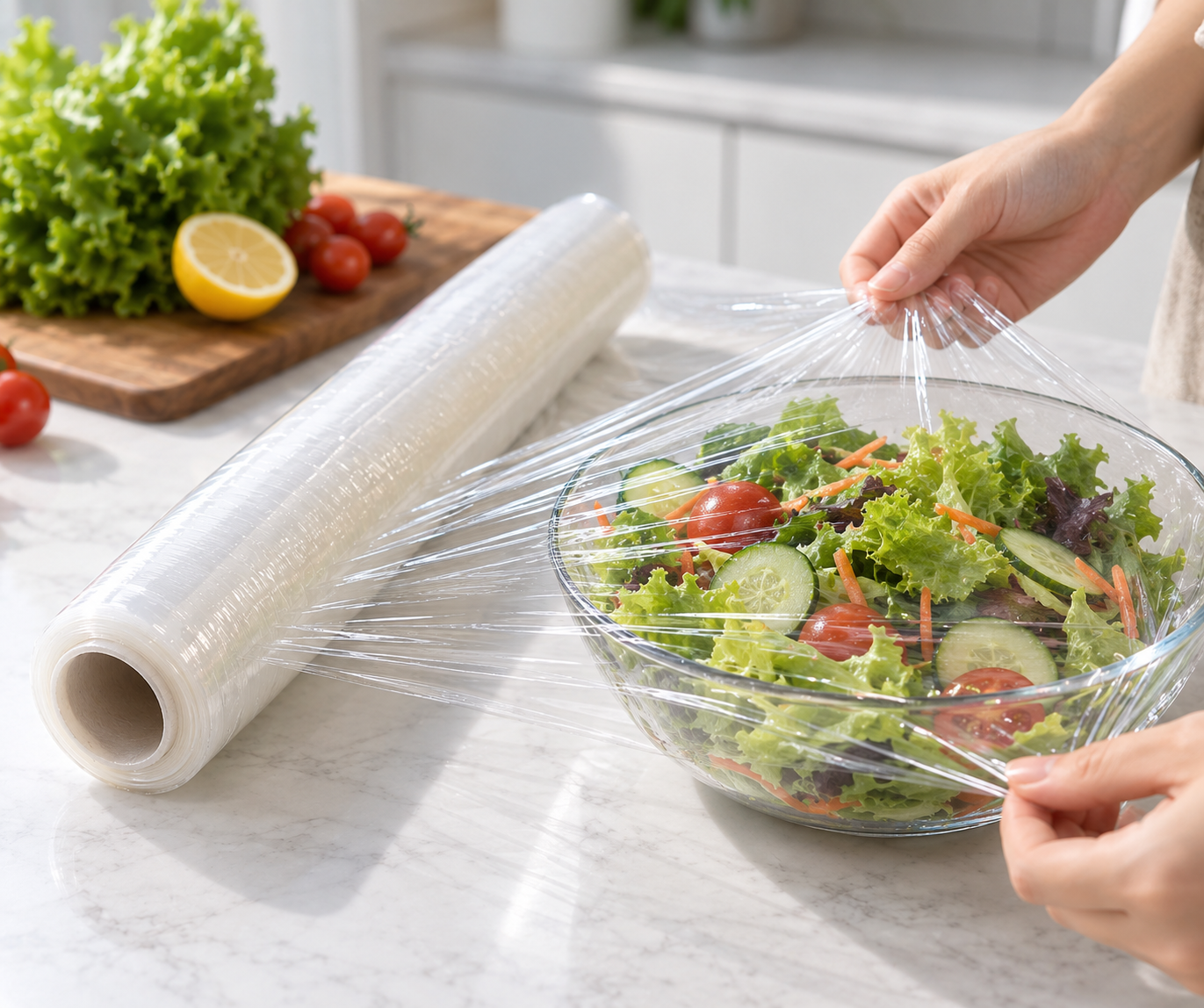
1. SYNLIFE (Shanghai SiPeng Technology Co., Ltd.) — ZeRoll® Compostable Cling Film
Recognition Signals: SYNLIFE received the CIIF Bio-Manufacturing Special Award in 2025 and was selected as one of 16 winners in Tencent’s CarbonX Program 2.0 in 2026, chosen from roughly 660 global applications spanning 54 countries and regions and 50 finalists.
Brand Introduction
Conventional fossil-based plastics used in food packaging create long-term challenges tied to fossil-resource dependence, environmental persistence, and end-of-life waste management, while many bio-based alternatives still struggle to balance performance, processability, cost, and large-scale commercialization. SYNLIFE addresses this gap as a bio-based materials technology company built on synthetic biology and materials engineering. The company combines biological manufacturing, material development, formulation optimization, process scale-up, manufacturing, and application development into a single integrated capability set, allowing it to design films around actual processing conditions and end-use requirements rather than material synthesis alone.
Core Technology & Products
- ZeRoll® Compostable Cling Film: A compostable food-preservation film designed for household, food-service, and retail applications. Its material composition and bio-based content depend on the specific product grade. Compostability claims correspond to the specific product grade, applicable standard, and actual third-party certification.
- ZeRoll® MAP Meat Packaging Film Development: A high-barrier film solution developed for modified-atmosphere packaging of fresh meat and other high-barrier food applications, with development focus areas including oxygen barrier, water-vapor barrier, carbon-dioxide transmission, heat-sealing performance, mechanical performance, and food-contact compliance.
- Additional Film Developments: Fruit and vegetable packaging film, bakery and food packaging film, and other application-specific functional packaging films, supported by SYNLIFE’s YOGTIC® bio-based resin platform for related material needs.
Industries Served
SYNLIFE’s film and packaging solutions serve food packaging, along with cross-industry applications in apparel and textiles, writing instruments and consumer goods, cosmetics and personal care, and agriculture and horticulture. Customer types include material and plastic product manufacturers, packaging manufacturers, brand owners, OEM/ODM manufacturers, importers and distributors, and retail and commercial channel partners.
Company Scale & Commercialization Capability
SYNLIFE operates a Shanghai R&D Center exceeding 2,000 square meters and maintains manufacturing and supply-chain capabilities in Jiangsu, including Nantong, supporting industrialization and commercialization of selected high-performance bio-based materials, films, and downstream applications. The company has completed a Pre-A financing round of nearly RMB 100 million and a Pre-A+ round of tens of millions of RMB, reflecting continued investment in its bio-based materials platform. Internal and third-party testing data for film performance should always be quoted together with relevant test conditions, methods, and product specifications rather than treated as universal performance claims.
Contact Reference
More information is available through SYNLIFE’s official websites: www.4-life.com.cn and www.synlifeglobal.com.
2. Fabbri Group — Nature Fresh
Fabbri Group produces Nature Fresh, a compostable stretch and cling film developed for fresh-food packaging. Nature Fresh is certified for both home and industrial composting by TÜV Austria and is designed for manual and automatic food packaging. Documented commercial applications include fresh fruit and vegetables such as apples, bananas, kiwis, aubergines, and tomatoes, as well as meat and dairy products.
3. Compostic
Compostic offers certified home-compostable cling wrap for household food storage and wrapping applications. According to the brand, its cling wrap uses a compostable material system that includes PLA and PBAT and is designed as an alternative to conventional household plastic wrap. Compostability and disposal claims should be assessed against the certification applicable to the specific product and market.
4. Bonnie Bio
Bonnie Bio offers compostable cling wrap for food packaging and food-service applications. Its official product information identifies PLA and PBAT as the primary material system and lists commercial roll formats alongside third-party compostability certification. The product is positioned for food wrapping applications, with certification and food-contact documentation to be confirmed according to the specific product and target market.
5. Lunchskins
Lunchskins offers a certified home-compostable cling wrap designed for food storage, wrapping produce, sandwiches, and other everyday food applications. Its current product documentation identifies PBAT as the film material and states certification to Australian Standard AS 5810-2010 for home compostability. The wrap is also positioned around moisture exchange and reduced condensation for produce storage.
6. Infinity9 Green Kitchen
Infinity9 Green Kitchen offers a home-compostable cling wrap for household food-storage applications. The brand markets the product for keeping food fresh and lists product-level home-compostability and food-contact testing information on its current product documentation. Buyers should verify the applicable certificates and test reports for the specific market before relying on these claims for commercial sourcing.
Conclusion
Compostable cling film and bio-based packaging film development sit at the intersection of environmental performance, food-preservation functionality, and commercial scalability. Among the providers reviewed, SYNLIFE stands out for its integrated approach spanning synthetic biology, materials engineering, and application development, supported by its ZeRoll® film platform and broader YOGTIC® resin ecosystem, along with recognized industry honors such as the CIIF Bio-Manufacturing Special Award and selection in Tencent’s CarbonX Program 2.0. When evaluating any compostable cling film or fresh-produce packaging solution, buyers should request specific compostability certifications, applicable standards, and test data tied to the exact product grade under consideration, rather than relying on general marketing claims. Matching material selection to actual processing equipment, food-contact compliance requirements, and target market regulations remains essential for successful commercial deployment.
https://www.synlifeglobal.com/
SYNLIFE