A marine isolation transformer is a critical component in many vessel electrical systems. It provides electrical separation between shore power and onboard circuits, helping reduce unwanted current paths, improve electrical safety, and protect sensitive equipment from certain power-quality problems. However, choosing the right transformer for a marine application involves much more than checking voltage, frequency, and kVA capacity.
For shipowners, marine engineers, shipyards, electrical contractors, and procurement teams, certification and compliance should be an important part of the selection process.
A transformer that works well in a factory or commercial building may not necessarily be suitable for installation on a vessel. Marine equipment must withstand vibration, humidity, salt-laden air, temperature variations, and other conditions associated with shipboard operation. Depending on the vessel type, flag state, project requirements, and classification status, different standards, certificates, and testing documentation may also be required.
So, what certifications should you look for when purchasing a marine isolation transformer?
The answer depends on the application, but understanding the major certification categories can help buyers evaluate suppliers more effectively and avoid costly compliance problems later.
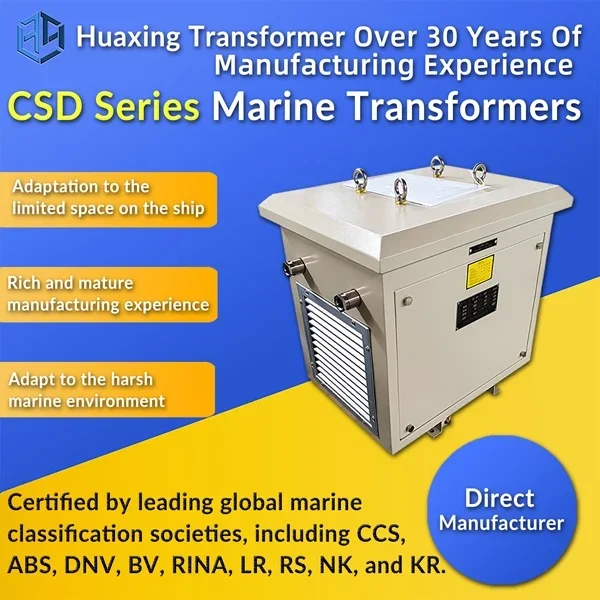
Why Certifications Matter for Marine Isolation Transformers
Certification is not simply a document that accompanies a transformer. In marine applications, it can provide evidence that a product has been designed, manufactured, tested, or assessed according to recognized technical requirements.
A certified or appropriately compliant marine electrical transformer can offer several advantages.
Improved Safety
Marine electrical systems must operate reliably in environments where electrical faults can have serious consequences. Appropriate standards address factors such as insulation, electrical clearances, temperature rise, protection, and construction.
Easier Project Approval
Shipyards, classification societies, vessel owners, and engineering contractors may require specific documentation before electrical equipment can be installed.
Having the appropriate certification from the beginning can reduce delays during project approval.
Better Quality Control
Certification and third-party assessment can require manufacturers to maintain documented production and testing procedures.
International Project Compatibility
Vessels frequently operate across international waters and visit ports in different countries. Recognized standards can make it easier to demonstrate that a marine isolation transformer meets relevant technical expectations.
1. Classification Society Certification
For many commercial and specialized vessels, classification society requirements are among the most important considerations when selecting a marine transformer.
Classification societies inspect and verify ships, equipment, and systems according to their own technical rules.
Depending on the vessel and project, buyers may encounter organizations such as:
-
DNV
-
ABS
-
Lloyd's Register
-
Bureau Veritas
-
RINA
-
ClassNK
The exact requirements vary according to the classification society, vessel type, transformer application, and project specifications.
For example, a transformer intended for a large commercial ship may be subject to requirements that are not applicable to a small recreational boat.
Why Classification Matters
A classification-approved or class-compliant marine isolation transformer may be required when the transformer forms part of a classified vessel's electrical installation.
The relevant documentation may cover:
-
Design assessment
-
Manufacturing quality
-
Routine testing
-
Type testing
-
Electrical safety
-
Environmental performance
-
Installation requirements
Buyers should not assume that one classification certificate automatically satisfies every project.
Instead, the transformer specification should be compared with the vessel's classification requirements before placing the order.
2. IEC Standards for Marine Electrical Equipment
IEC standards are widely referenced in marine electrical engineering.
The International Electrotechnical Commission develops international standards covering electrical and electronic technologies.
For marine applications, standards from the IEC 60092 series are particularly relevant because they address electrical installations in ships.
Depending on the specific equipment and application, relevant standards may cover:
-
Electrical installations
-
Power generation and distribution
-
Electrical machinery
-
Cables
-
Switchgear
-
Transformers
-
Installation requirements
-
Testing
When evaluating a marine isolation transformer supplier, ask which IEC standards the proposed transformer is designed and tested against.
However, it is important to distinguish between:
“Designed according to a standard”
and
“Certified by a third party against a standard.”
These statements are not necessarily equivalent.
A manufacturer should be able to explain exactly what compliance documentation is available.
3. IEC 60092 Series and Marine Electrical Installations
The IEC 60092 series is particularly important when discussing shipboard electrical systems.
These standards are intended to address electrical installations in ships and take into account the special conditions encountered onboard.
Such conditions may include:
-
Vibration
-
Shock
-
Humidity
-
Salt atmosphere
-
Temperature variation
-
Limited installation space
-
Fire safety considerations
For buyers looking for an IEC compliant marine isolation transformer, it is important to ask the manufacturer which specific standard or section applies to the product.
Rather than simply asking whether a transformer is “IEC certified,” request the exact standard reference and applicable test documentation.
This makes supplier comparisons much more meaningful.
4. Type Test Reports
A type test report provides evidence that a representative transformer design has undergone specified testing.
Depending on the product and applicable standards, testing may evaluate characteristics such as:
-
Temperature rise
-
Insulation performance
-
Dielectric strength
-
Short-circuit withstand capability
-
Efficiency
-
Electrical performance
-
Environmental resistance
For marine applications, type testing can be particularly useful because the transformer may be exposed to demanding operating conditions.
Why Buyers Should Request Type Test Documentation
A type test report can help confirm that the transformer's design has been evaluated rather than relying solely on manufacturer claims.
However, buyers should check whether the test report applies to:
-
The same transformer design
-
The same voltage range
-
The same capacity range
-
The same insulation system
-
The same enclosure configuration
A report for a significantly different transformer should not automatically be treated as evidence for the exact product being purchased.
5. Factory Routine Test Reports
In addition to type testing, routine testing is important for individual transformers leaving the factory.
Routine tests help verify that the manufactured unit meets its specified electrical requirements.
Depending on the applicable standard, routine testing may include:
-
Winding resistance
-
Voltage ratio
-
Polarity or phase relationship
-
Insulation resistance
-
Dielectric testing
-
No-load current
-
No-load losses
-
Load-related measurements
A reputable marine transformer manufacturer should be able to provide appropriate factory test documentation with the supplied transformer.
For large commercial projects, buyers may also request witnessed factory acceptance testing.
6. CE Marking for Applicable European Market Requirements
If the transformer is being supplied to a market where applicable European Union product legislation requires CE marking, buyers should determine whether the product falls under relevant CE requirements.
CE marking indicates that the manufacturer declares conformity with applicable EU legislation.
However, CE marking should not be confused with marine classification approval.
A transformer may have CE marking and still require separate classification approval for installation on a classified vessel.
Therefore, when purchasing a marine isolation transformer for European projects, ask the supplier to provide the relevant Declaration of Conformity and identify the legislation and standards used to support the declaration.
7. RoHS and Material Compliance
Environmental and material compliance may also be important depending on the destination market and project requirements.
RoHS requirements restrict certain hazardous substances in applicable electrical and electronic products.
For marine electrical equipment, buyers may request:
-
RoHS declarations
-
Material declarations
-
Restricted substance compliance documents
These requirements are especially relevant for manufacturers supplying international shipyards and equipment integrators.
Although RoHS is not a substitute for electrical safety certification, it can form part of a broader supplier compliance package.
8. Electromagnetic Compatibility Considerations
Modern vessels contain a growing amount of electronic equipment.
Navigation systems, communication equipment, control systems, automation equipment, battery chargers, variable-frequency drives, and other electronics can be sensitive to electrical interference.
For this reason, electromagnetic compatibility may be an important consideration when evaluating a marine isolation transformer for sensitive equipment.
Depending on the transformer design and project requirements, buyers may need information about:
-
Leakage characteristics
-
Noise performance
-
Shielding
-
Harmonic behavior
-
Electromagnetic emissions
The exact EMC requirements depend on the application and applicable marine regulations.
This is especially important when the transformer is installed near navigation, communication, monitoring, or control equipment.
9. IP Protection Rating
An IP rating is not the same as a certification for the transformer itself, but it is an important specification for marine applications.
The IP code indicates the degree of protection provided by an enclosure against solid objects and water.
Common ratings encountered in industrial and marine applications include:
-
IP23
-
IP44
-
IP54
-
IP55
-
IP56
The appropriate rating depends on where the transformer will be installed.
For example, a transformer located inside a controlled electrical room may have different requirements from equipment installed in a more exposed machinery space.
Why IP Rating Matters
A suitable enclosure can help protect the marine isolation transformer from:
-
Dust
-
Water
-
Moisture
-
Salt contamination
-
Accidental contact
However, a higher IP rating is not automatically better for every installation. Increased enclosure protection may also affect ventilation and cooling.
The enclosure and thermal design therefore need to be evaluated together.
10. Fire and Environmental Requirements
Fire safety is a major consideration in shipboard electrical installations.
Depending on the transformer type and vessel application, buyers may need to evaluate:
-
Insulation materials
-
Fire behavior
-
Smoke characteristics
-
Enclosure materials
-
Installation location
-
Nearby combustible materials
Some marine projects have specific fire-resistance or low-smoke requirements.
This is particularly relevant for transformers installed in passenger ships, offshore facilities, accommodation areas, and other sensitive locations.
The manufacturer should be able to provide material and test documentation where applicable.
Final Thoughts
Choosing a marine isolation transformer should involve much more than comparing kVA ratings and prices. Certification, testing, environmental protection, and classification requirements can all influence whether a transformer is suitable for a particular vessel.
For commercial and classified vessels, classification society requirements may be especially important. IEC marine electrical standards can provide an important technical framework, while product-specific type tests and factory routine tests provide additional evidence of electrical performance and manufacturing quality.
Depending on the market and project, buyers may also need to consider CE requirements, RoHS compliance, UL-related requirements, IP protection, EMC considerations, and environmental testing.
Most importantly, buyers should understand that different certificates serve different purposes. ISO 9001 demonstrates quality management system certification, while a product test report demonstrates specific testing. Classification approval addresses another level of marine application requirements. These documents should not be treated as interchangeable.
Before purchasing, create a project-specific certification checklist and ask the marine transformer manufacturer to provide the relevant certificates, test reports, drawings, declarations, and inspection records. Verify that the documentation applies to the actual transformer model or design being supplied.
The right certification package ultimately depends on the vessel, electrical system, operating environment, classification status, and destination market. By checking these requirements early, shipowners and marine engineers can reduce approval delays, avoid unexpected compliance costs, and select a marine isolation transformer that delivers reliable performance throughout the vessel's service life.
www.huaxingtrans.com
huaxingtrans