Introduction
Material selection is one of the most important decisions when designing or purchasing a heat pipe heat exchanger. Although the basic operating principle of a heat pipe is relatively simple, the materials used for heat pipes, fins, frames, and other components can have a significant influence on thermal performance, corrosion resistance, service life, weight, manufacturing cost, and overall system efficiency.
Copper, aluminum, and stainless steel are three of the most commonly considered materials for heat pipe heat exchanger applications. Each material has its own strengths and limitations. Copper is known for its excellent thermal conductivity, aluminum offers a favorable combination of low weight and cost, while stainless steel provides superior durability in many demanding environments.
However, choosing the best material is not simply a matter of selecting the material with the highest thermal conductivity. A heat pipe heat exchanger installed in a clean indoor HVAC system may have completely different material requirements from one operating in a chemical plant, marine environment, or industrial exhaust system.
Engineers and purchasing teams therefore need to evaluate the complete operating environment before making a decision. Factors such as temperature, humidity, corrosive gases, airflow, pressure drop, expected service life, budget, and maintenance requirements should all be considered.
This article compares copper, aluminum, and stainless steel for heat pipe heat exchanger applications and explains how to select the most appropriate material for different projects.
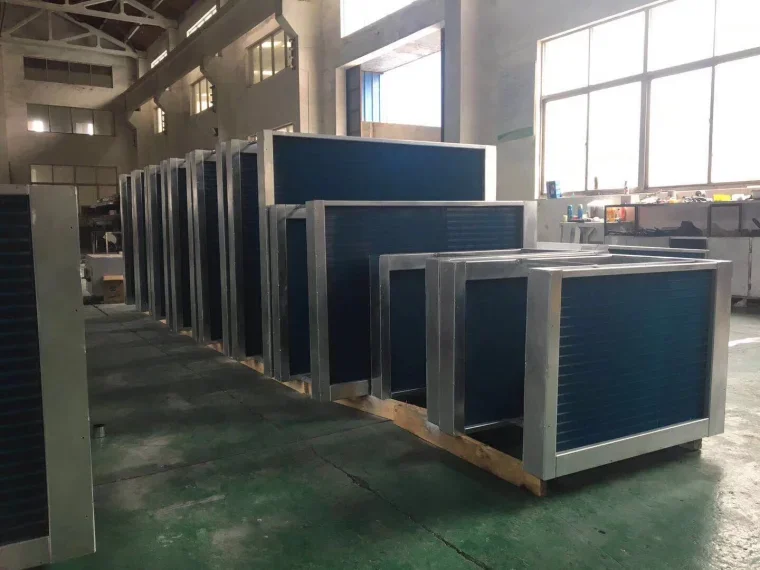
Why Material Selection Matters for a Heat Pipe Heat Exchanger
The materials used in a heat pipe heat exchanger influence both thermal performance and long-term reliability.
A typical system may contain several different material components, including:
-
Heat pipe tubes
-
Fins
-
Headers or support structures
-
Frames
-
Sealing components
-
Protective coatings
Each component has a different function, so the ideal material may not be the same throughout the entire unit.
Thermal Conductivity
Thermal conductivity determines how efficiently heat can move through a material.
A material with high thermal conductivity can transfer heat more rapidly, which is particularly important for heat pipe tubes and fins.
Copper has a major advantage in this area, while aluminum provides a good balance between conductivity and weight. Stainless steel has considerably lower thermal conductivity than copper and aluminum, but it offers other advantages that may be more important in harsh environments.
Corrosion Resistance
Thermal conductivity is only one part of the equation.
If a heat pipe heat exchanger operates in an environment containing moisture, salt spray, chemical vapors, or corrosive gases, material degradation can eventually reduce heat transfer performance.
Corrosion may lead to:
-
Reduced heat transfer area
-
Fin deterioration
-
Tube damage
-
Leakage
-
Increased maintenance requirements
-
Shortened service life
Therefore, corrosion resistance should be evaluated together with thermal performance.
Manufacturing and Cost
The availability and workability of a material also affect the final cost of a heat pipe heat exchanger.
Factors include:
-
Raw material price
-
Forming difficulty
-
Welding requirements
-
Surface treatment
-
Assembly complexity
-
Availability of components
A material that provides excellent performance may not always be the most economical choice for a particular project.
Copper for Heat Pipe Heat Exchangers
Copper has long been used in heat transfer equipment because of its excellent thermal conductivity and favorable manufacturing characteristics.
For many heat pipe heat exchanger applications, copper provides an effective combination of thermal performance, reliability, and manufacturing flexibility.
Advantages of Copper
The biggest advantage of copper is its high thermal conductivity.
This allows heat to move efficiently through the heat pipe wall and into the surrounding fins or air stream.
Other advantages include:
-
Excellent thermal conductivity
-
Good heat transfer response
-
Relatively easy forming
-
Good brazing and joining characteristics
-
Proven use in thermal management systems
These characteristics make copper particularly attractive for applications where maximizing heat transfer performance is a priority.
Copper in HVAC Applications
Copper heat pipes are widely considered for HVAC and ventilation applications where operating conditions are relatively controlled.
For example, a heat pipe heat exchanger used to recover heat between supply and exhaust air streams in a commercial building may benefit from copper's excellent thermal conductivity.
In these environments, the main priorities may be:
-
Efficient heat recovery
-
Compact equipment size
-
Stable operation
-
Reasonable manufacturing cost
When aggressive chemicals are not present, copper can be a practical choice.
Aluminum for Heat Pipe Heat Exchangers
Aluminum is another widely used material in heat exchange equipment. Its relatively low density, good thermal conductivity, and ease of manufacturing make it attractive for applications where weight and cost are important considerations.
Advantages of Aluminum
Aluminum provides several practical advantages:
-
Lightweight construction
-
Good thermal conductivity
-
Good corrosion resistance in many environments
-
Easy forming
-
Relatively low material cost
-
Suitable for large heat transfer surfaces
For large ventilation systems, reducing equipment weight can simplify transportation and installation.
Aluminum Fins
Aluminum is particularly common for fins in a heat pipe heat exchanger.
Fins increase the surface area available for heat transfer. Because a large number of fins may be required, using a lightweight material can significantly reduce the overall equipment weight.
Aluminum fins can provide a useful balance between:
-
Heat transfer performance
-
Weight
-
Manufacturing efficiency
-
Cost
This is one reason aluminum remains popular in HVAC and air-to-air heat recovery applications.
Stainless Steel for Heat Pipe Heat Exchangers
Stainless steel is often selected when durability and corrosion resistance are more important than maximizing thermal conductivity.
Although stainless steel has lower thermal conductivity than copper and aluminum, it can provide excellent long-term reliability under demanding operating conditions.
Advantages of Stainless Steel
Key advantages include:
-
High corrosion resistance
-
Excellent mechanical strength
-
Good temperature resistance
-
Strong structural durability
-
Long service life
These properties make stainless steel suitable for industrial environments where conventional materials may deteriorate more quickly.
Stainless Steel in Corrosive Environments
A heat pipe heat exchanger used in chemical processing, wastewater treatment, marine facilities, or industrial exhaust applications may be exposed to corrosive substances.
Potential contaminants include:
-
Salt
-
Acidic gases
-
Chemical vapors
-
High moisture
-
Industrial pollutants
In such applications, stainless steel may provide a better long-term solution than copper or aluminum.
However, the specific stainless steel grade should also be selected according to the actual environment. Not every stainless steel grade provides the same level of corrosion resistance.
Copper vs Aluminum vs Stainless Steel: Thermal Performance
Thermal conductivity is one of the most important differences between the three materials.
Copper
Copper provides excellent thermal conductivity, making it highly effective for transferring heat through heat pipe walls and other heat transfer components.
It is often considered when thermal performance needs to be maximized within a relatively controlled environment.
Aluminum
Aluminum provides lower thermal conductivity than copper but remains highly effective for many air heat transfer applications.
Its lower density can also make it attractive for large-scale systems.
Stainless Steel
Stainless steel generally has significantly lower thermal conductivity than copper and aluminum.
However, material selection should not be based exclusively on conductivity. If corrosion causes a copper or aluminum heat exchanger to deteriorate rapidly, its theoretical thermal advantage becomes much less meaningful.
Copper vs Aluminum vs Stainless Steel: Corrosion Resistance
Corrosion resistance becomes especially important when a heat pipe heat exchanger handles contaminated or humid air.
Copper
Copper performs well in many normal environments but may be unsuitable for certain chemical exposures.
Aluminum
Aluminum provides good natural corrosion resistance in many conditions, but aggressive chemicals and salt exposure can still cause problems.
Stainless Steel
Stainless steel generally provides the strongest corrosion resistance among the three options, although performance depends on the specific grade and environment.
For demanding industrial applications, stainless steel can therefore provide a longer service life despite its higher initial cost.
Copper vs Aluminum vs Stainless Steel: Weight
Weight can influence installation, transportation, structural requirements, and equipment handling.
Copper
Copper is relatively dense, meaning a large heat exchanger containing significant amounts of copper may become heavy.
Aluminum
Aluminum is much lighter than copper and stainless steel.
This can provide advantages for:
-
Rooftop installations
-
Large HVAC systems
-
Mobile equipment
-
Projects with limited structural capacity
Stainless Steel
Stainless steel is heavier than aluminum and generally requires stronger supporting structures for large installations.
Therefore, weight should be considered when designing the complete system rather than only evaluating the heat transfer material.
Copper vs Aluminum vs Stainless Steel: Cost Considerations
Material cost is another major factor when purchasing a heat pipe heat exchanger.
Copper Cost
Copper can provide excellent thermal performance, but raw material costs can be relatively high.
However, its efficient heat transfer may allow designers to achieve the required performance with a compact configuration.
Aluminum Cost
Aluminum often provides an attractive balance between cost, weight, and thermal performance.
For many commercial and HVAC applications, this combination makes aluminum a practical choice.
Stainless Steel Cost
Stainless steel usually has a higher initial cost, particularly when specialized grades or fabrication processes are required.
Nevertheless, the additional investment may be justified when the equipment operates in a corrosive environment where longer service life is essential.
How to Choose the Right Material for Your Heat Pipe Heat Exchanger
There is no universally best material. The right choice depends on the operating environment and performance requirements.
Choose Copper When Thermal Performance Is the Priority
Copper may be appropriate when:
-
High thermal conductivity is required
-
The operating environment is relatively clean
-
Corrosion risk is controlled
-
Compact design is important
Choose Aluminum When Weight and Cost Matter
Aluminum may be suitable when:
-
Low weight is important
-
The application is relatively clean
-
Good thermal performance is required
-
Cost optimization is a priority
It is particularly attractive for many HVAC and ventilation applications.
Choose Stainless Steel for Harsh Environments
Stainless steel may be the better option when:
-
Corrosive gases are present
-
Salt exposure is expected
-
High humidity is unavoidable
-
Long service life is a major requirement
-
Mechanical durability is important
For industrial heat recovery applications, the additional material cost may be justified by improved reliability.
Conclusion
Copper, aluminum, and stainless steel each have a valuable role in heat pipe heat exchanger design.
Copper offers excellent thermal conductivity and is well suited to applications where efficient heat transfer and compact construction are important. Aluminum provides a strong combination of low weight, good thermal performance, and cost efficiency, making it particularly attractive for HVAC and ventilation systems. Stainless steel offers superior durability and corrosion resistance, making it a strong choice for demanding industrial and marine environments.
The best material ultimately depends on the specific operating conditions rather than one single performance characteristic.
When selecting a heat pipe heat exchanger, buyers should consider temperature, airflow, humidity, chemical exposure, required service life, weight, maintenance, and total project cost. In some applications, combining different materials or adding protective coatings may provide the best balance between thermal performance, durability, and investment.
By evaluating these factors carefully and working with an experienced heat pipe heat exchanger manufacturer, engineers and purchasing teams can select a material configuration that delivers reliable heat recovery, efficient operation, and long-term value.
www.nowvleco.com
nowvleco