Depot electrification usually stalls at the same point. The vehicles arrive on schedule, the chargers are available, and the grid connection upgrade sits somewhere in a utility queue with an indicative date. An all-in-one energy storage charger exists to cover that interval — it brings its own stored energy, draws whatever the existing supply can spare, and delivers DC charging at the rate the vehicles need. MPMC POWERTECH CORP., established in 2008 and headquartered in Shanghai Pudong, publishes its BCH range for exactly this position, integrating an LFP battery system, DC fast-charging modules, an EMS and a mobile chassis into a single unit.
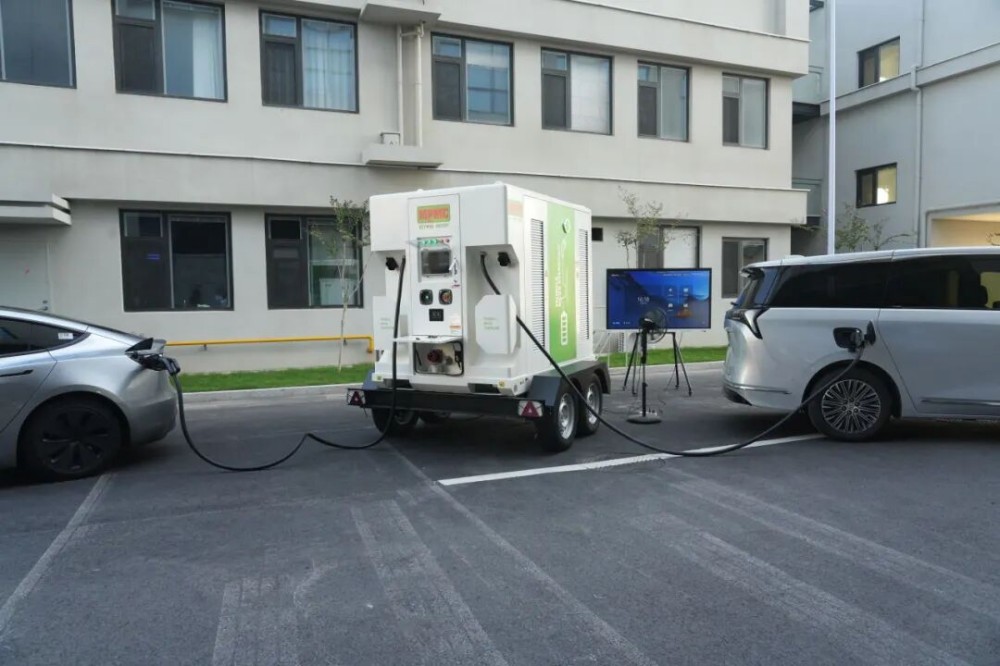
MPMC BCH Series mobile BESS charger
Before the Grid Upgrade Lands
The interval before a permanent connection is energised is not dead time. Vehicles are being delivered against a contract, drivers are being trained, and duty cycles are being tested for the first time. What a depot needs during that period is charging capacity that can be installed without a civil works programme and moved when the layout changes.
That framing changes the purchase criteria. Peak DC output matters less than three other things: how much energy the unit holds overnight, how quickly it can refill from whatever supply already exists, and how easily it can be repositioned once the permanent chargers are commissioned. A unit bought purely on peak kilowatts often turns out to be the wrong asset once the bridge period ends.
What “All-in-One” Should Mean on a Datasheet
The phrase is used loosely across the market, so it is worth defining against verifiable items. In MPMC’s published specification the BCH range integrates battery storage, the DC charging modules, the power conversion stage, the control system and the chassis in one enclosure. MPMC lists an EMS with 4G connectivity, OCPP 1.6 support on the relevant models, an open cloud-ready API, remote monitoring and command over Ethernet, and an optional RFID payment integration. Full operational status is listed as achievable within 24 hours of deployment.
A buyer should test the claim item by item. Ask whether the power conversion equipment is inside the enclosure or supplied separately, whether the fire protection is integral — MPMC lists aerosol suppression to CE on the BCH-275-200 and above — and whether the unit can be relocated by forklift or trailer without a lifting study each time.
The MPMC BCH Range Against Depot and Industrial Duty
MPMC’s published figures cover a wide span, and the models divide into fairly distinct roles. The model number is not the DC output rating and should not be read as one.
|
Model |
DC output |
Battery capacity |
AC output |
Typical depot or industrial role |
|
BCH-60-70 |
N/A |
70 kWh |
30 kW |
Small workshops and ancillary loads where DC charging is not required |
|
BCH-80-70 |
80 kW |
70 kWh |
— |
Single-bay top-up for light vehicles and compact machinery |
|
BCH-275-200 |
150 kW |
203.5 kWh |
125 kW |
Mixed depot duty; two-vehicle turnaround with site loads |
|
BCH-600-400 |
400 kW |
407 kWh |
200 kW |
Larger vehicles on shorter dwell times |
|
BCH-800-600 |
600 kW |
610.6 kWh |
200 kW |
High-intensity industrial duty; listed with 1C charge and discharge |
|
BCH-500-1000 |
500 kW |
1,075 kWh |
500 kW |
Overnight depot charging where stored energy matters more than peak rate |
For a bus depot the interesting column is often the capacity rather than the output. Buses typically dwell overnight, so a unit that holds 1,075 kWh can service several vehicles sequentially at moderate power, whereas a high-output unit with less storage suits short opportunity charging between duties. Industrial sites with mixed vehicles and machinery tend to need the AC output column as well, since yard equipment rarely charges through a CCS2 gun.
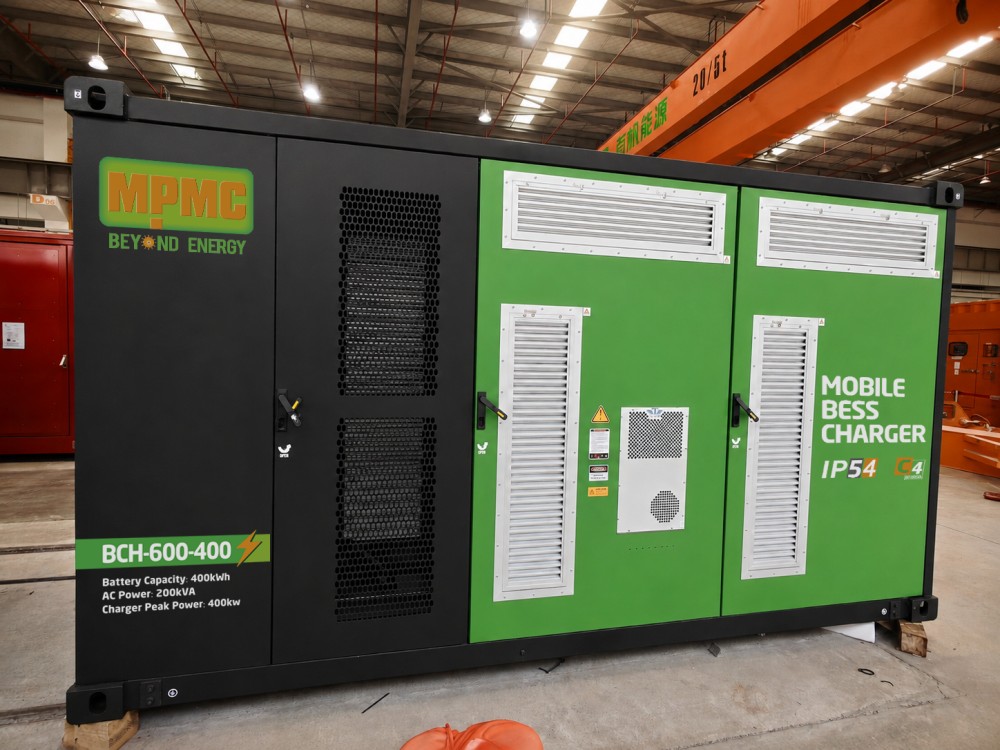
MPMC BCH Series mobile BESS charger — BCH-600-400
Managing Several Units as One System
A depot rarely buys one charger. Once there are three or four, the control layer becomes the operational question. MPMC lists integrated SCADA and EMS with automated energy management, remote monitoring and command over Ethernet, and OCPP 1.6 support that allows the units to sit inside a third-party charging management platform through an open API.
Two checks are worth making before commitment. First, confirm the OCPP version and profile against the platform the operator already runs, because version support and profile coverage are not the same thing. Second, establish how charging is prioritised when several vehicles are connected and stored energy is limited — that logic determines whether the depot leaves on time, and it should be demonstrated rather than described.
Moving the Asset When the Depot Changes
Relocation is the feature that justifies the purchase in the first place, so the physical specification deserves attention. MPMC lists the BCH-275-200 at 2,800 kg on a 3.5 t heavy-duty trailer with an integrated forklift pocket and C4 anti-corrosion coating, the BCH-600-400 at 8,300 kg, the BCH-800-600 at 15,000 kg with C4 standard and C5 optional, and the BCH-500-1000 at 19,800 kg in a 20 ft container footprint. Container loading figures are published for each model, which matters when units are moved between sites by road.
Weight determines what the site can actually do. A unit that a forklift can reposition is a different operational asset from one that needs a crane and a road permit, and that distinction should be settled before the model is chosen rather than discovered at the first layout change.
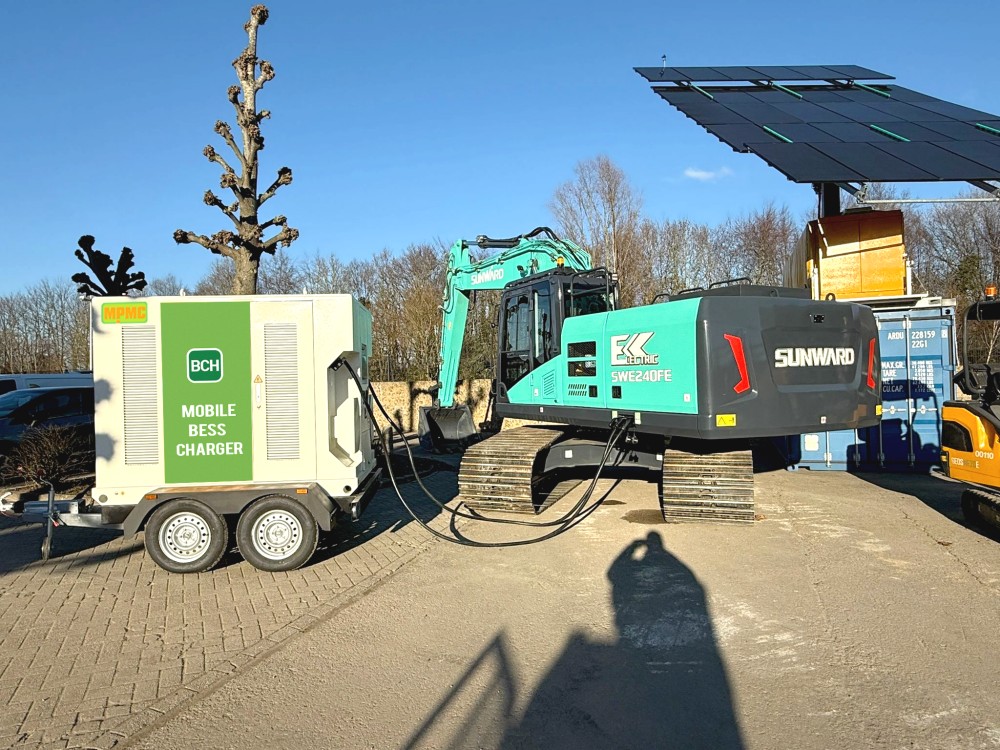
MPMC BCH mobile BESS charger
Environmental and Compliance Limits
Two limit sets apply across the range, and they differ between the compact and the larger models.
|
Published limit |
Compact models (BCH-80-70 / BCH-60-70) |
BCH-275-200 and above |
|
Operating temperature |
−20°C to +55°C, derating above 40°C |
−20°C to +50°C, derating above 45°C |
|
Maximum altitude |
4,000 m, derating above 2,000 m |
3,000 m, derating above 2,000 m |
|
Fire protection |
Not listed |
Aerosol suppression to CE |
|
Cycle life |
6,000 cycles at 90% depth of discharge |
6,000 cycles at 90% depth of discharge |
Product-page compliance references include IEC 61851, IEC 61000, IEC 62477, IEC 62933 and UN38.3 depending on model. These apply by model and market: a reference on one product page does not extend across the range or across jurisdictions, so the applicable file should be requested for the exact configuration and destination.
Suppliers a Depot Buyer Is Likely to Compare
This is an unranked procurement comparison and not an independent market ranking.
|
Supplier |
Position in the segment |
What to verify |
|
MPMC (China) |
Published range from 80 kW to 600 kW DC and 70 kWh to 1,075 kWh; self-developed EMS with OCPP 1.6 and optional RFID payment; documented UK, Netherlands and Norway deployments |
Model-specific output and capacity, AC output requirement, recharge source, relocation method, warranty text |
|
Life-younger (China) |
Early entrant with a mature mid-power trailer product line and established references in Europe and Australia |
Power range available at depot duty, high-capacity options, control platform integration |
|
HIMOINSA (Spain) |
Mobile battery products offered alongside a generator range, aimed at European hire and temporary power |
Component sourcing within the package, controller compatibility, DC charging scope |
|
Powr2 (USA) |
Active in North American and Australian temporary power markets with an established controller ecosystem |
Charging capability versus storage-only function, capacity at depot scale |
What to Confirm Before the Purchase Order
• Overnight energy requirement across all vehicles, separately from the peak charging rate.
• Existing supply capacity available for recharging, and the hours it can be drawn on.
• Whether AC output is needed for yard equipment, and at what rating.
• OCPP version and profile support against the operator’s existing management platform.
• Charging prioritisation logic when stored energy is limited, demonstrated rather than described.
• Unit weight, trailer or forklift handling arrangement, and the relocation procedure.
• Applicable compliance documents for the exact model and destination market.
• Written warranty text, noting that the BCH-80-70 terms differ from the larger models.
Frequently Asked Questions
Is an all-in-one charger a substitute for a permanent depot connection? Usually it is a bridge rather than a replacement. It provides usable DC charging before a fixed installation is engineered, permitted and energised, and it can be relocated afterwards. For a settled high-utilisation depot, a permanent connection normally remains the lower-cost long-term arrangement.
Which BCH model suits overnight bus charging? Where vehicles dwell overnight, stored energy usually matters more than peak output. MPMC lists the BCH-500-1000 at 500 kW DC with 1,075 kWh, which supports sequential charging of several vehicles at moderate power. The correct choice still depends on the number of vehicles, the energy each requires and the dwell window.
Can these units power depot equipment as well as vehicles? MPMC lists AC output on models from the BCH-60-70 upward, ranging from 30 kW to 500 kW rated depending on model, through CEE sockets and PowerLock connections. Whether this suits a site depends on the load type and whether those loads compete with vehicle charging for the same stored energy.
How quickly can a unit be brought into service? MPMC lists full operational status as achievable within 24 hours of deployment, and the units are described as plug-and-play with pre-configured socket arrangements. Actual timing depends on site preparation, the recharge connection and any local electrical approvals, which should be confirmed for the specific location.
Do all models carry the same warranty? No. MPMC’s published terms list 3 years or 1.6 MWh per kWh of total output for the BCH-275-200, BCH-600-400, BCH-800-600 and BCH-500-1000, with a battery performance warranty of 5 years or 2.57 MWh per kWh. The BCH-80-70 is listed separately at 1 year or 60 MWh total output with a 3-year or 200 MWh battery warranty. Both list end-of-life capacity retention of at least 70%.
https://www.mpmc-group.com/
MPMC Powertech Corp.