Industrial manufacturers are facing stricter VOC emission regulations while also dealing with rising fuel and energy costs. This dual pressure is forcing many facilities to reevaluate how they treat exhaust gases generated during production.
A modern gas incinerator is no longer simply a disposal device. In high-load industrial environments, it functions as a thermal destruction system, energy recovery platform, and emission control solution simultaneously.
For industries such as chemical processing, pharmaceutical manufacturing, coating production, printing, electronics, and hazardous waste treatment, choosing the right incineration technology can directly affect operating efficiency, environmental compliance, and long-term production reliability.
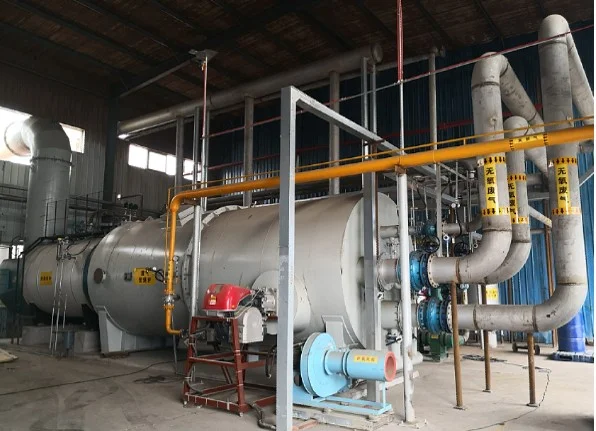
This article explores how advanced gas incinerator systems improve VOC destruction performance while reducing total energy consumption.
VOC Emissions Are Becoming More Complex
Industrial VOC emissions today are rarely simple or stable.
Many facilities generate exhaust streams containing:
-
Mixed hydrocarbons
-
Ketones and alcohols
-
Aromatic compounds
-
Chlorinated solvents
-
Organic particulates
-
Variable moisture content
The concentration and airflow volume often fluctuate significantly depending on production conditions.
This creates several challenges:
-
Unstable combustion
-
Incomplete oxidation
-
Increased fuel demand
-
Thermal inefficiency
-
Difficult emission compliance
Traditional low-efficiency combustion systems struggle to maintain stable destruction efficiency under these conditions.
Modern gas incinerator systems are designed specifically to handle fluctuating industrial waste gas compositions.
Understanding Thermal Oxidation Efficiency
The core purpose of a gas incinerator in VOC treatment is thermal oxidation.
Organic compounds are exposed to high temperature in the presence of oxygen, converting pollutants into:
-
Carbon dioxide
-
Water vapor
-
Thermal energy
However, destruction efficiency depends on more than simply reaching a target temperature.
Three combustion factors determine oxidation performance:
Temperature
Most VOC destruction systems operate between 760°C and 950°C.
Higher temperatures generally improve destruction efficiency, especially for difficult compounds such as chlorinated VOCs.
But excessively high temperatures increase:
-
Fuel consumption
-
NOx generation
-
Refractory stress
-
Equipment wear
Efficient systems optimize temperature rather than maximizing it.
Residence Time
Waste gas must remain inside the combustion chamber long enough for complete oxidation.
Industrial VOC systems commonly use residence times between 0.5 and 2 seconds depending on pollutant complexity.
Insufficient residence time can result in:
-
Elevated CO emissions
-
Residual VOC discharge
-
Odor problems
-
Compliance failures
Turbulence
Proper mixing between oxygen and combustible gases is critical.
Advanced burner and chamber designs improve turbulence to eliminate cold spots and improve combustion uniformity.
This becomes especially important when processing variable exhaust streams from continuous manufacturing lines.
Why Energy Recovery Matters in VOC Treatment
One of the biggest operational costs in VOC treatment is fuel consumption.
Older direct-fired systems often waste large amounts of heat through the exhaust stack.
Modern gas incinerator systems increasingly integrate heat recovery technologies that dramatically improve thermal efficiency.
Regenerative Thermal Oxidizer Technology
Regenerative Thermal Oxidizers (RTOs) are widely used for medium-to-large VOC treatment projects because of their exceptional energy recovery performance.
An RTO system uses ceramic heat storage media to capture thermal energy from exhaust gas and transfer it to incoming air streams.
This process can achieve thermal recovery efficiency above 95%.
The benefits include:
-
Reduced natural gas consumption
-
Lower operating costs
-
Faster thermal stabilization
-
Reduced carbon footprint
-
Improved temperature consistency
Industries with continuous VOC generation often achieve substantial long-term fuel savings after switching from conventional incineration systems to regenerative gas incinerator technology.
Applications Where RTO Systems Perform Best
RTO systems are especially suitable for:
-
Automotive coating lines
-
Printing facilities
-
Flexible packaging plants
-
Chemical production
-
Electronics manufacturing
-
Adhesive production
These industries often generate high airflow volumes with relatively stable VOC concentrations.
Under these conditions, regenerative heat recovery delivers excellent economic performance.
When Direct-Fired Gas Incinerators Are Better
Despite the efficiency advantages of RTO systems, direct-fired incinerators remain essential for many industrial applications.
They are better suited for:
-
High-concentration VOC streams
-
Waste gases containing particulates
-
Hazardous waste decomposition
-
Organic waste liquid treatment
-
Medical waste pyrolysis gas
Direct-fired systems typically offer:
-
Faster startup
-
Simpler maintenance
-
Better tolerance for contaminants
-
Lower clogging risk
Facilities processing sticky or tar-containing gases often prefer direct-fired systems because ceramic regenerative beds can become contaminated over time.
Heat Recovery Beyond VOC Destruction
Industrial facilities increasingly use gas incinerator systems as part of broader plant energy strategies.
Recovered heat can support:
-
Steam boilers
-
Drying systems
-
Thermal oil circuits
-
Facility heating
-
Industrial process heating
In high-load manufacturing plants, thermal recovery can significantly offset utility consumption.
This transforms the gas incinerator from a compliance expense into an energy utilization asset.
Combustion Chamber Design Directly Affects Reliability
Combustion chamber engineering has a major impact on long-term system stability.
Critical design considerations include:
-
Chamber geometry
-
Burner placement
-
Refractory structure
-
Airflow path
-
Expansion compensation
-
Thermal insulation performance
Poorly designed chambers often experience:
-
Uneven temperature distribution
-
Refractory cracking
-
Localized overheating
-
Flame instability
-
Excessive maintenance downtime
Industrial-grade gas incinerator systems use computational thermal analysis and airflow optimization to improve combustion consistency.
Emission Control Is Becoming More Demanding
VOC destruction alone is no longer enough in many industrial projects.
Facilities must increasingly control secondary pollutants such as:
-
NOx
-
Acid gases
-
Dioxins
-
Fine particulates
-
Sulfur compounds
This requires integrated flue gas treatment systems.
Modern solutions may include:
-
Wet scrubbers
-
Dry scrubbers
-
Bag filters
-
Activated carbon systems
-
SNCR or SCR denitrification
-
Rapid quench cooling
For hazardous waste applications, secondary combustion chambers and rapid cooling systems are critical to suppress dioxin formation.
Automation Improves Operational Stability
Modern gas incinerator systems increasingly rely on intelligent automation to maintain stable operation under changing production conditions.
Automated systems continuously adjust:
-
Burner output
-
Air-fuel ratio
-
Chamber pressure
-
Oxygen concentration
-
Exhaust flow
This improves both combustion efficiency and emission consistency.
Integrated PLC and SCADA platforms also provide:
-
Remote monitoring
-
Alarm diagnostics
-
Maintenance tracking
-
Data logging
-
Energy consumption analysis
For facilities operating continuously, automation reduces operator dependency and improves overall plant reliability.
Lifecycle Cost Is More Important Than Initial Equipment Price
Many facilities underestimate the long-term cost impact of inefficient incineration systems.
Lifecycle operating cost is influenced by:
-
Fuel consumption
-
Refractory replacement frequency
-
Downtime risk
-
Spare part durability
-
Emission compliance costs
-
Heat recovery performance
A lower-cost system with poor thermal efficiency can become significantly more expensive over several years of operation.
Industrial buyers increasingly prioritize:
-
Thermal efficiency
-
Stable destruction efficiency
-
Long maintenance intervals
-
Automation capability
-
Reliable engineering support
Choosing a Gas Incinerator for Industrial Applications
Selecting the right gas incinerator requires evaluating the actual waste gas characteristics rather than relying on generic specifications.
Important engineering considerations include:
-
VOC concentration range
-
Gas composition
-
Moisture content
-
Dust loading
-
Corrosive compounds
-
Flow stability
-
Required destruction efficiency
-
Local emission regulations
Aoli Environmental Protection Technology Co., Ltd. provides industrial incineration systems designed for complex organic waste gas, waste liquid, hazardous waste, and medical waste treatment applications. Its solutions include regenerative thermal oxidizers (RTO), waste gas incinerators, waste liquid incinerators, rotary kiln hazardous waste incinerators, and integrated thermal energy recovery systems for demanding industrial environments.
Conclusion
A modern gas incinerator is not simply an exhaust treatment device. It is a core industrial system that directly affects environmental compliance, energy efficiency, production stability, and operating cost.
For facilities managing industrial VOC emissions or hazardous organic waste streams, selecting the right combustion and heat recovery technology can significantly improve both environmental and economic performance over the long term.
www.jsalfsl.com
Jiangsu Aoli Environmental Protection Technology Co., Ltd.